
A Goldilocks approach to stream restoration in Pennsylvania
LandStudies designs and constructs stream restoration projects with support from multiple partners
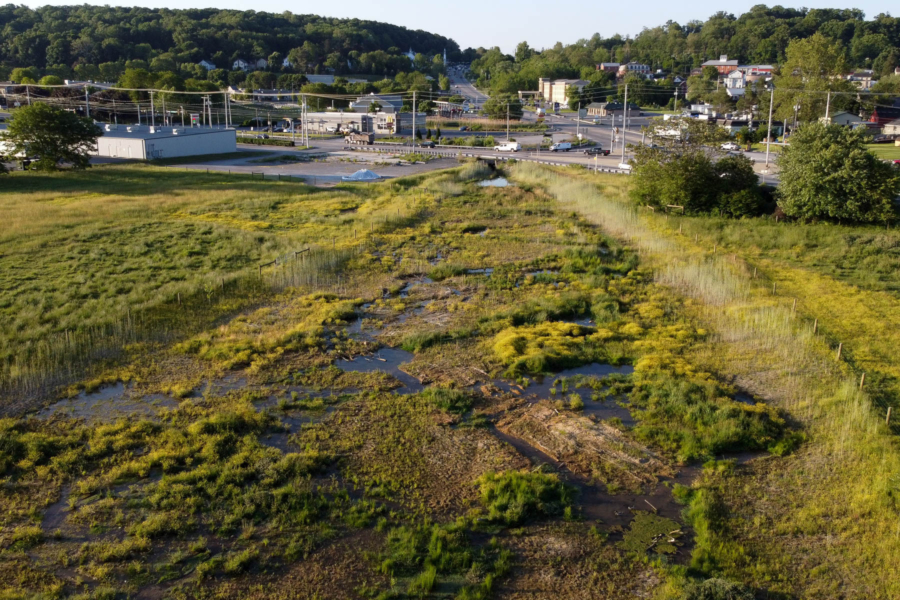
While no part of the Chesapeake Bay is within the Pennsylvania border, its health is intimately connected to the tens of thousands of small rivers and streams that flow through the commonwealth and into the estuary.
When sections of these waterways degrade over time, they send excess sediment and nutrient pollution downstream, harming fish, shellfish and other wildlife. To combat this, townships in Pennsylvania work hand-in-hand with landowners to restore impacted streams. The projects serve as a way for townships to meet local stormwater regulations while supporting Chesapeake Bay pollution targets.
On the border of Lancaster and Chester counties, three neighboring stream restoration projects show this collaborative spirit in action. Designed by the environmental engineering firm LandStudies and supported by local, state and federal funding, these projects demonstrate how communities are making tangible progress toward clean water goals—one stretch of stream at a time.
Williams Run: Small-Scale
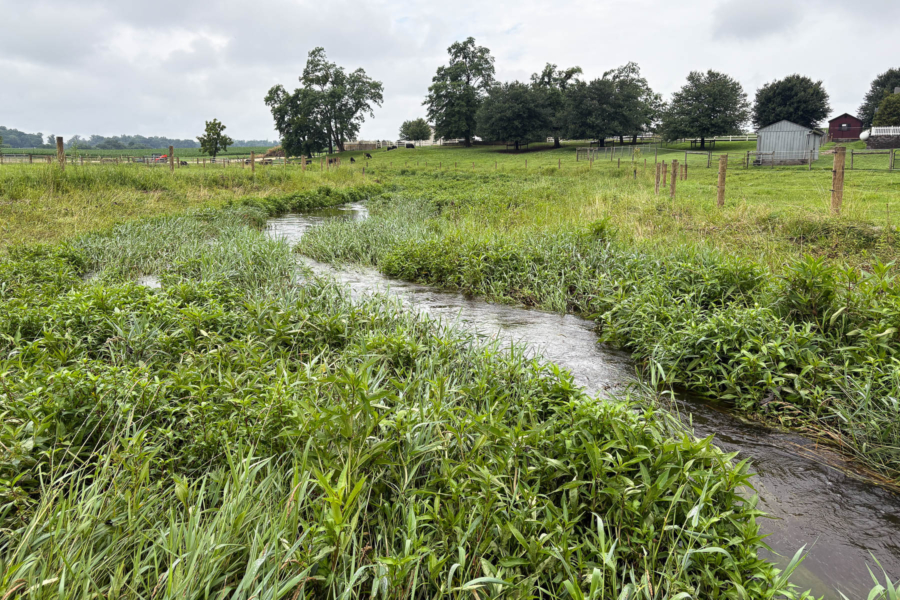
In Fall 2024, Sadsbury Township collaborated with a farm owner to restore approximately 240 linear feet of a severely eroded stream flowing through his property.
The completed project is expected to reduce sediment discharge into the greater East Branch Octoraro Creek watershed by nearly 11,000 pounds per year, helping the township meet its stormwater permit requirements. Additionally, the restored section of the stream also includes a fenced-in path for livestock to safely travel across, which had previously been difficult in the stream’s degraded condition.
LandStudies served as the engineering firm on the project along with support from Flyway Excavating Inc, and with funding primarily from Lancaster County.
Officers Run: Mid-Scale
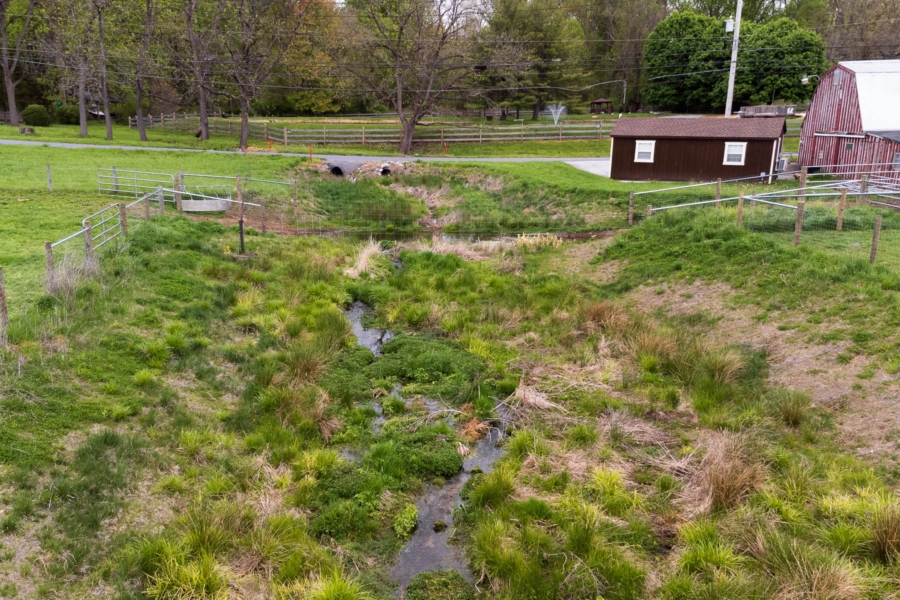
On a farm just a few miles away, LandStudies collaborated with West Sadsbury Township and other partners to repair about 890 linear feet of Officers Run—another tributary of the Octoraro Creek.
After identifying potential locations for restoration in the township, LandStudies reached out to a handful of landowners and ultimately selected an Amish farmer who had a section of the stream winding through his property. In Spring 2025, LandStudies restored the stream’s eroded banks, planted native plants and trees, and reconnected the stream with its floodplain. The design also incorporated fencing to keep livestock out of the repaired stream and two bridges for cattle to safely cross.
The project is keeping an estimated 39,943 pounds of sediment out of the watershed annually and was funded by the U.S. Environmental Protection Agency through a subgrant awarded by the National Fish and Wildlife Foundation to the Chester County Conservation District.
Gap Park’s Pequea Creek tributaries: Large-Scale
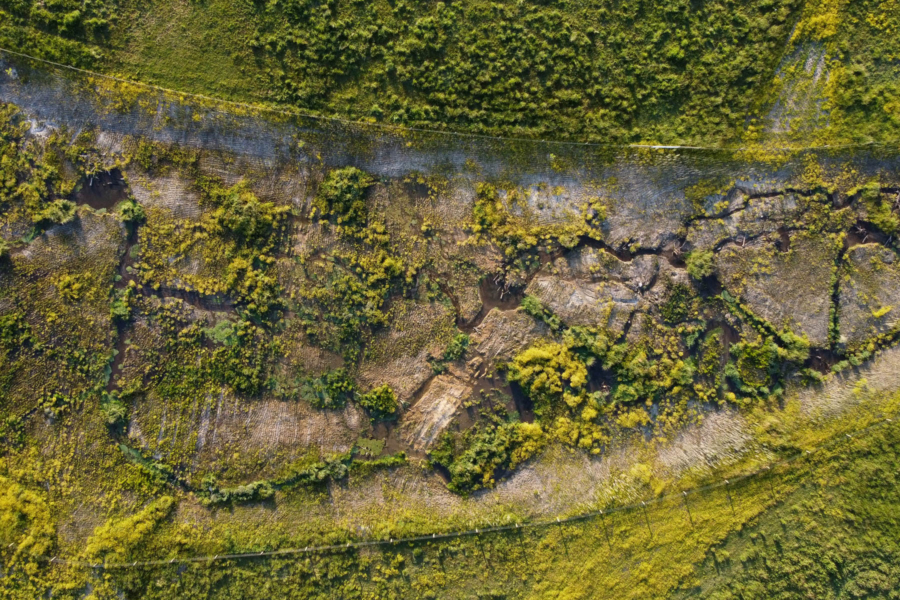
At the largest scale, LandStudies completed a major stream and wetland restoration project at Gap Park, a public park in Salisbury Township, Lancaster County.
This project focused on restoring approximately 1,615 linear feet of floodplain and 2.69 acres of degraded wetlands along two highly unstable tributaries to Pequea Creek. By tackling the stream repair and wetland restoration together, this project is expected to reduce sediment discharge by over 185,000 pounds per year while creating high quality habitat for fish, amphibians and macroinvertebrates. The restored wetlands are also expected to provide extra protection to the stream by soaking up stormwater runoff that would otherwise put pressure on the stream.
The large-scale project included a variety of funding partners including the Lancaster Farmland Trust and the Environmental Protection Agency, through subgrants from the National Fish and Wildlife Foundation and Alliance for the Chesapeake Bay.
A cumulative impact
By working with private landowners and public parks, LandStudies was able to help local townships protect their local waterways and address state and federal pollution reduction targets. Together, these projects will provide a cumulative impact that strengthens these smaller watersheds in Sadsbury and Salisbury Township.
Comments
There are no comments.
Thank you!
Your comment has been received. Before it can be published, the comment will be reviewed by our team to ensure it adheres with our rules of engagement.
Back to recent stories