
A light touch and a strong arm boost wetlands on the Anacostia
A three-year restoration is advancing new techniques in Washington, D.C.
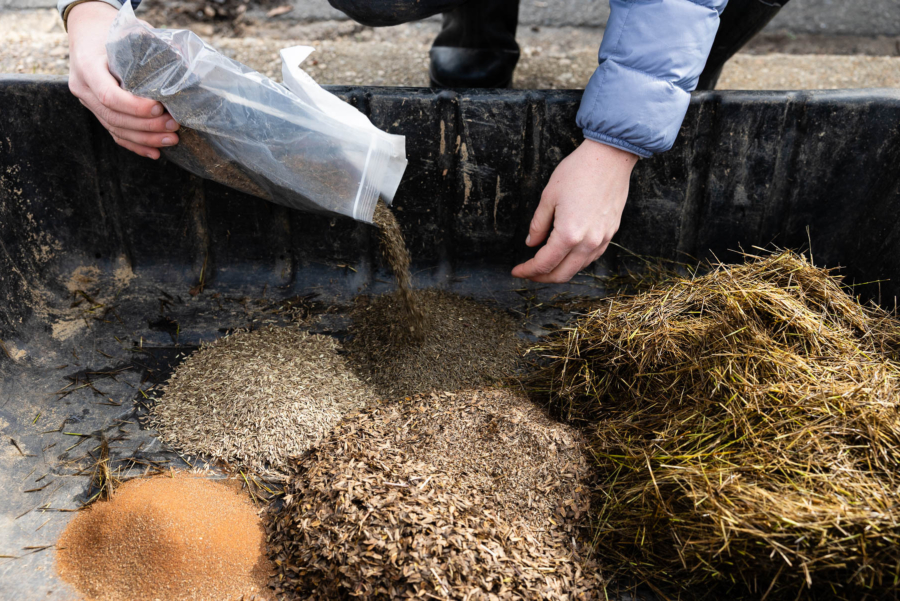
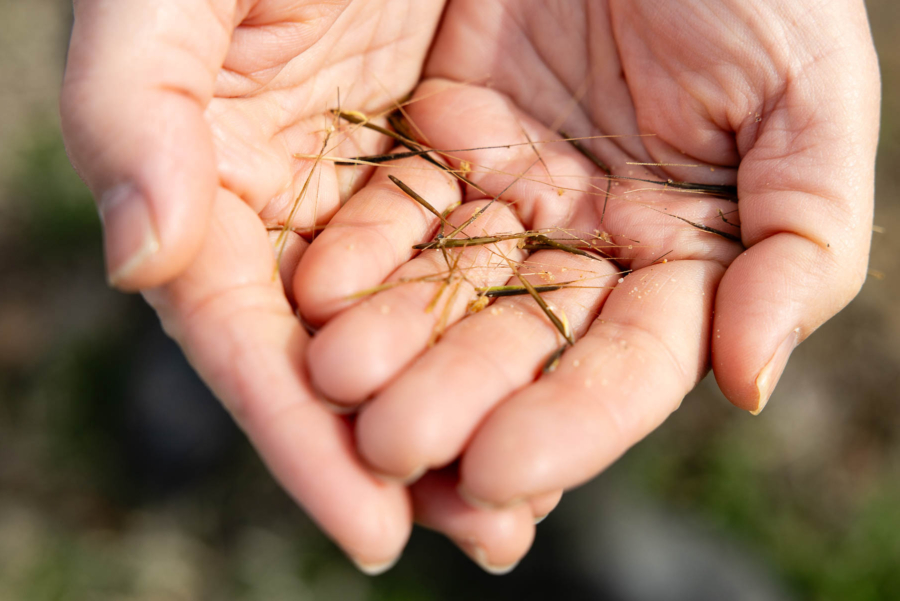
At a park overlooking the Anacostia River in the River Terrace neighborhood of Washington, D.C., Nora Snyder of Actaeon, LLC, poured native plant seeds into a large black tray. Piles representing sneezeweed, beggarticks, rice cutgrass, soft rush and joe pye weed formed different textures and earth-toned hues. Kneeling by Snyder’s side, Jorge Bogantes Montero, Restoration Program Manager for the Anacostia Watershed Society (AWS), added a moist, tangled pile of wild rice seeds.
“OK, we’re making multigrain bread,” joked Montero.
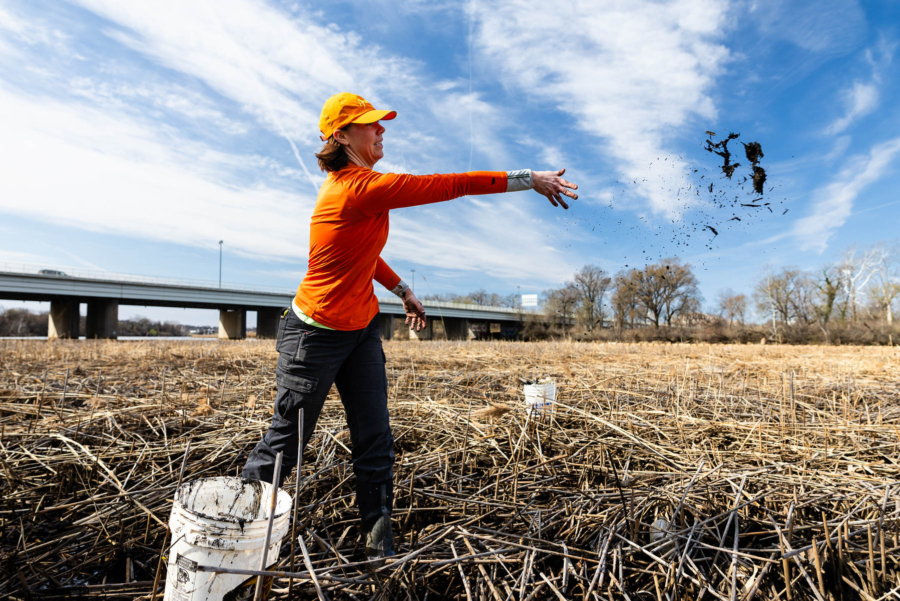
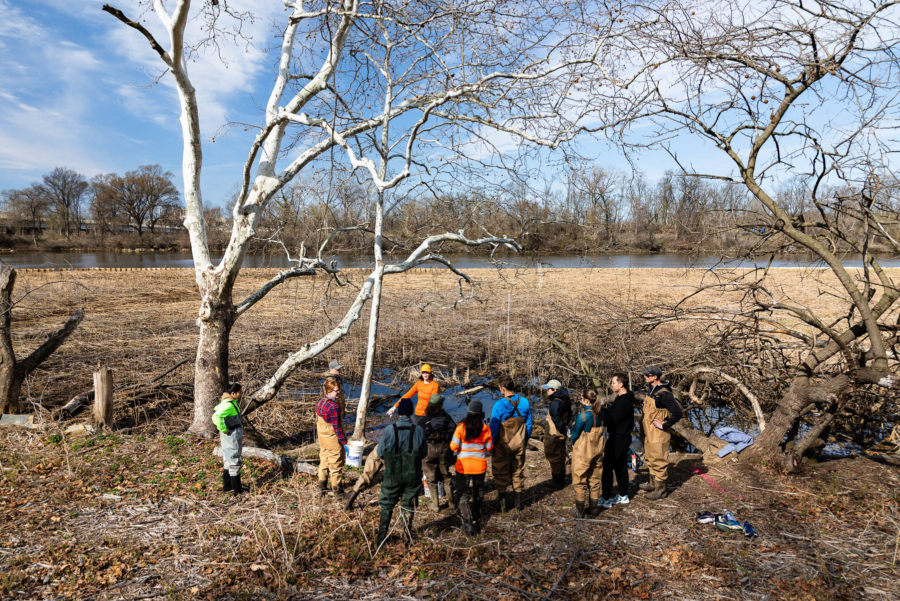
In reality, they were mixing the ingredients for a restored wetland. Montero wore gloves while handling the strong-smelling rice, and a handful of volunteers watched as he added a few scoops of play sand. Then the group donned waders and spread out along River Terrace’s stretch of the Anacostia to fling some mud.
Wetlands reborn, then restored
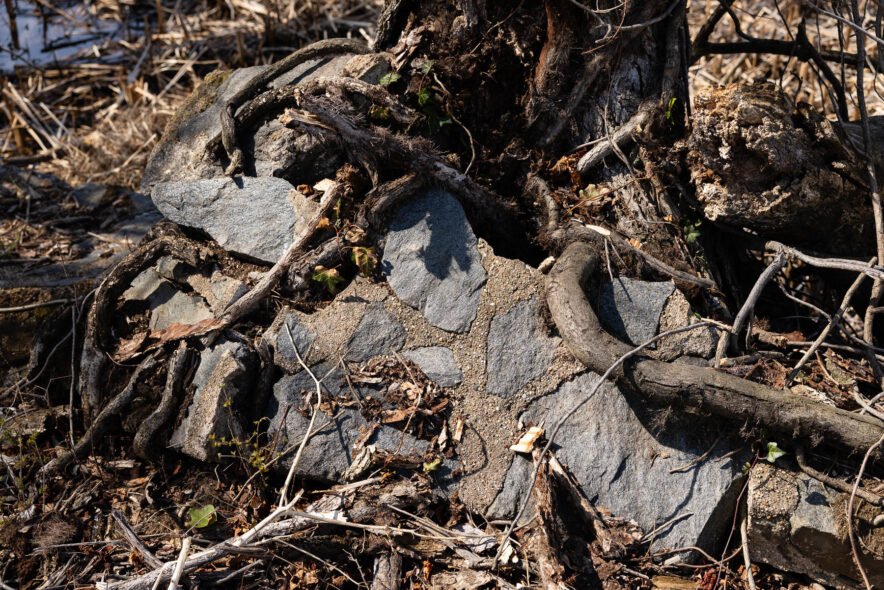
Along River Terrace’s stretch of the Anacostia is part of a historic sea wall, built in the early 1900s, that was responsible for the loss of 90% of the tidal marshes along the river. Eventually, wetlands came to be valued for their ability to filter stormwater, lessen flooding and support high levels of biodiversity. Starting in the 1990s, D.C. worked with the U.S. Army Corps of Engineers (USACE) Baltimore District to design and build fringe wetlands on the Anacostia using sediment dredged from the river.
As a crisp wind blew on that March morning, the River Terrace volunteers stepped down from the now-crumbling sea wall into an 11-acre fringe wetland built in 2003. Over the decades, non-native invasive species have taken over, displacing much of the native plant cover that support a wider range of wildlife. By 2023, phragmites, a tall invasive grass, occupied as much as 40% of the wetland. Bush honeysuckle, as well as invasive vines like porcelainberry, occupied about 600 feet of upland area along the riverbank.
“It was dense,” said Donna An, founder of Actaeon. “It was a jungle.”
Under a $300,000 grant from the D.C. Department of Energy and Environment (DOEE) that was funded by the Environmental Protection Agency, Actaeon was chosen to lead a restoration of the River Terrace wetland starting in 2024. The three-year project called for removing the disruptive species using methods that didn’t disturb the ground beneath or the sea wall, which falls on land owned by the National Park Service.
To accomplish this, Actaeon is using a novel approach that could inform future projects.
“We wanted to see some more innovative methods or maybe some experimental methods to actually see what's going to work best,” said Michelle Campbell, manager of the grant for DOEE, who joined the volunteers the day of the seeding event.
In addition to common hand removal and chemical treatment methods—using chainsaws and herbicide—Actaeon is documenting the effectiveness of solarization plots. Large black sheets of plastic have been placed on portions of the phragmites-infested areas of the wetland for year-long intervals.
“We did a control where all we did was cut the phragmites and put solarization, so we could see the effectiveness of just doing solarization—because there’s not a lot of information out there,” An said.
If it proves effective at killing the phragmites, Snyder said, the solarization method could “be a good low-cost, no-chemical alternative.”
A muddy gathering
Facing his helpers, Montero stepped gingerly into the River Terrace wetland and held some of the seed mix, explaining how it was going to be spread.
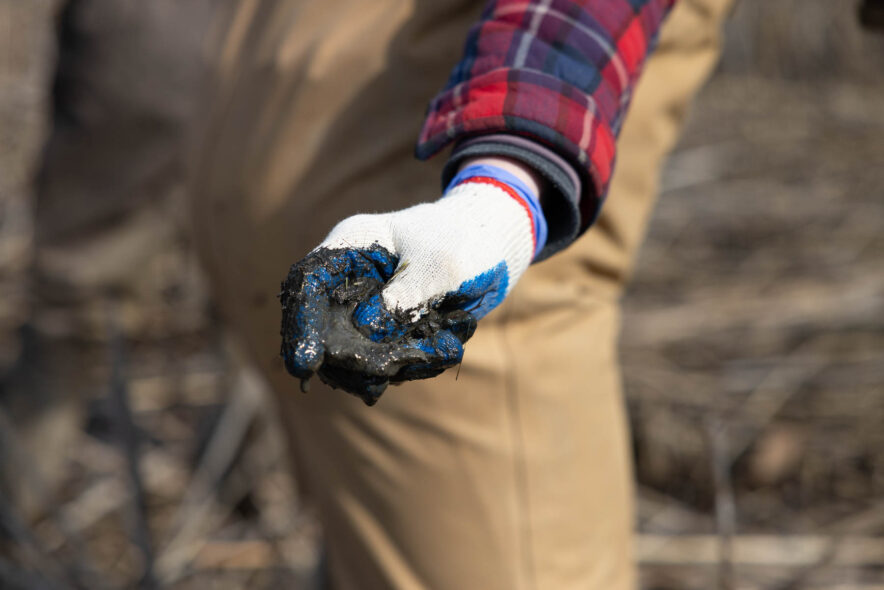
“We’re going to mix it with mud from the wetland,” Montero said, taking a handful from below his feet. “And then what we’re going to do is mix it thoroughly, until it looks like cow dung, basically.”
“Any takers?”
The volunteers learned quickly that the key to success was throwing balls of mud with enough force that they spread evenly across the stubble of chopped phragmites stems. They just had to keep their balance while doing so, which was a delicate operation in the waterlogged marsh.
Since the project began, Actaeon’s work has included community engagement. It has joined the River Terrace Community Organization’s events, including its annual garden tour, and some members of the organization have since become wetland volunteers.
“We have a long heritage and history of community involvement in the natural environment,” said one such volunteer, Matthew McClure, a block captain with the 75-year-old organization.
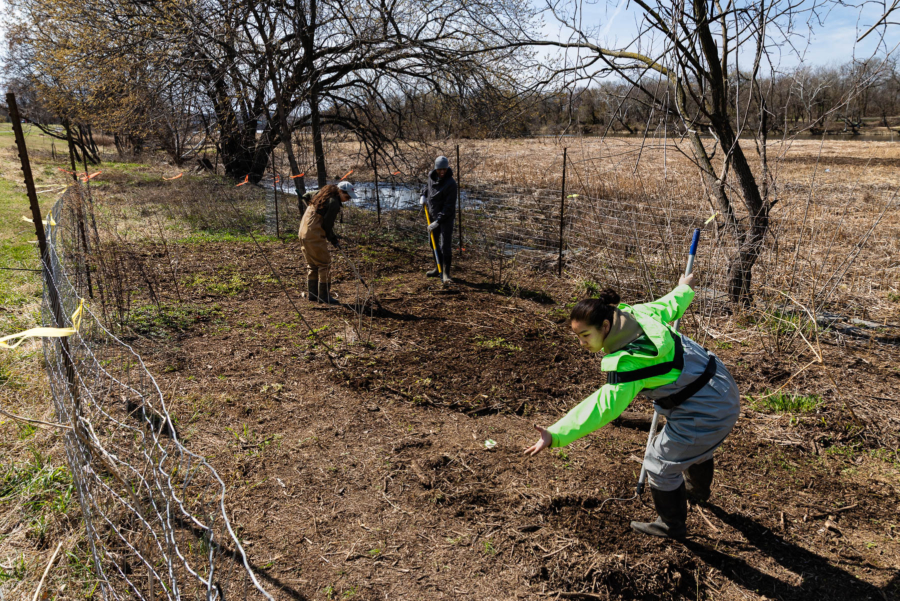
Actaeon held a similar mud ball seeding in early 2025. But the first growing season held some other surprises.
“We started seeing some natives that we hadn’t seen come up on their own because they’re finally seeing sun,” An said.
On a visit last July, An found swamp rose mallow—a wetland species they didn’t plant—blooming where dense reeds once stood.
An also hopes to bring American lotus back to this part of the Anacostia. She and Montero have been collecting and germinating seeds from a nearby lotus population in Maryland, and Actaeon plans to introduce seeds from various locations to boost the genetic diversity of the rare, creamy yellow flower.
The March event ended with Actaeon crew members and volunteers in the upland area, carefully weeding around native shrubs like false indigo bush that were discovered underneath the honeysuckle. With more light, they too are expected to thrive.
Another benefit is that the dense invasives no longer block the scenic view, allowing a closer connection to the Anacostia to take root for residents. On summertime visits, while checking on the solarization plots, Snyder said she has heard some positive reactions.
“They’ll stop me as I’m walking,” Snyder said. “And they’re excited to be able to see the river from their front porch.”
Comments
There are no comments.
Thank you!
Your comment has been received. Before it can be published, the comment will be reviewed by our team to ensure it adheres with our rules of engagement.
Back to recent stories