
First-time birders should keep an eye out for this gateway bird
The American robin is one of the most common birds to see in the Chesapeake region
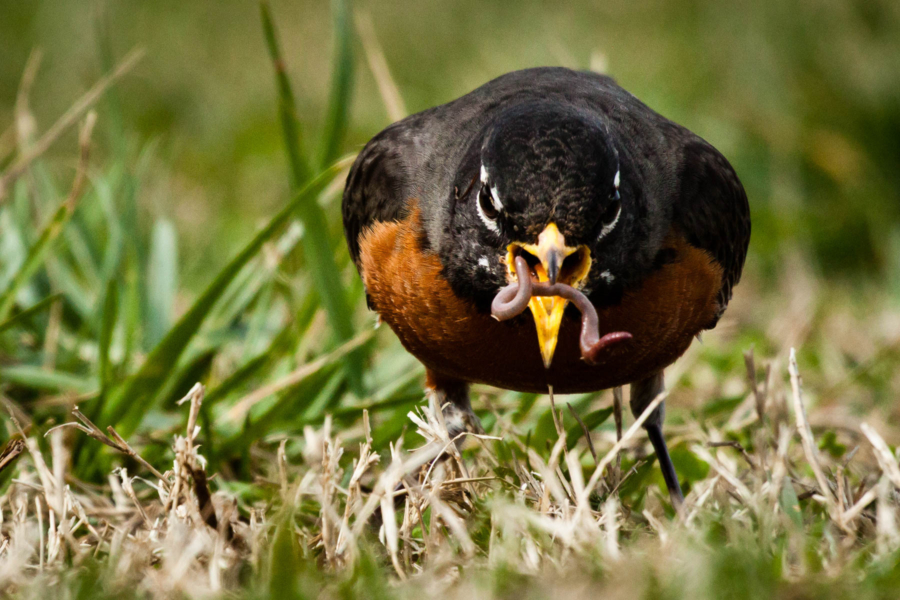
If you’ve ever taken a step outside your house and noticed a cheerful song coming from the trees, there is a good chance that it was an American robin going about its day. As one of the most abundant bird species in the Chesapeake region, this bird is the perfect starting point for anyone looking to get into birding.
A bright orange belly, gray back and long legs make it easy to identify, even for a first-time birder. Robins are also incredibly adaptable and comfortable around people, which means you don’t need to go deep into the woods to spot one. A quick walk through your neighborhood, a local park or even your backyard will often do the trick.
What makes the American robin such a good “gateway bird” is not only its visibility, but also its behavior. These birds are active during the day and are often foraging for worms and fruits on open lawns, giving new birders a great opportunity to observe them up close. Their song, a series of clear chirps that mark the beginning and end of the day, is another trait that helps beginners start tuning their ears to different bird calls.
Robins also follow seasonal patterns that are easy to track. While some remain in the region year-round, larger flocks arrive in early spring, signaling the changing of the seasons. Breeding season for American robins lasts from April through July, with each season often bringing two or three sets of young for each pair. The American robin has an iconic, easily recognizable baby blue egg color, which is also an attraction for birders. Robins are known to be fiercely protective of their young, watching over the nest and feeding them until they are ready to go out on their own about two weeks after hatching.
For those just starting out with birding, the American robin offers a low-barrier, high-reward experience. With a pair of binoculars and a little patience, spotting and identifying robins can quickly lead to noticing other birds in the same habitat. Today it’s a robin; tomorrow it might be an eastern bluebird, cedar waxwing or even a Cooper’s hawk soaring overhead.
Next time you hear that familiar morning tune or see a flash of orange hopping across the lawn, take a closer look – you might just be at the beginning of a lifelong hobby!
Comments
There are no comments.
Thank you!
Your comment has been received. Before it can be published, the comment will be reviewed by our team to ensure it adheres with our rules of engagement.
Back to recent stories