
Hypoxia buoys look out for the Bay’s dissolved oxygen, but who’s looking out for them?
Hypoxia monitoring sensors require routine maintenance to give accurate readings to help detect dead zones
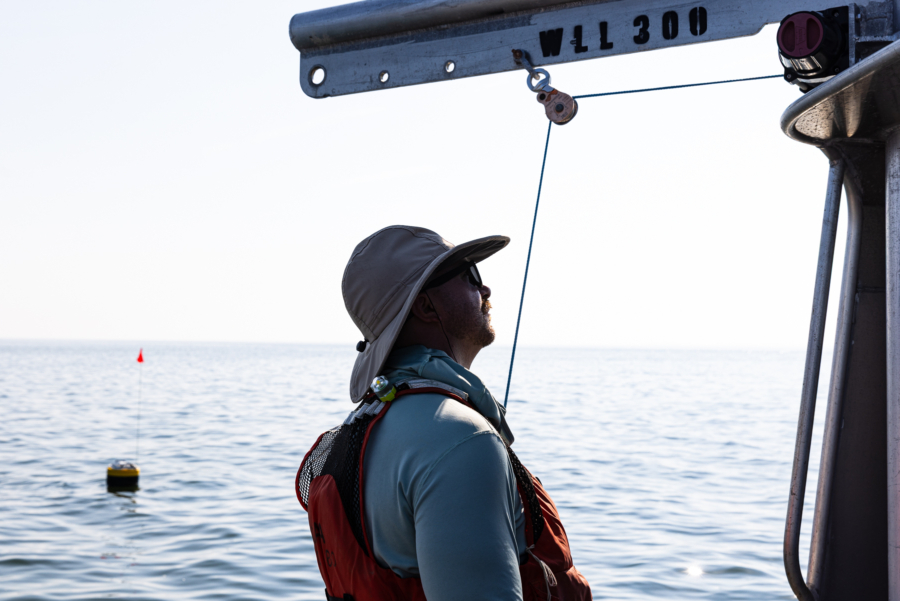
In the late July heat with temperatures nearing 100 degrees, the hypoxia buoy monitoring team packed their truck with tools, wiring, replacement materials and monitoring equipment to perform routine maintenance of the hypoxia buoy monitoring systems in the Choptank River on Maryland’s Eastern Shore.
Water hypoxia is present when dissolved oxygen is too low to support aquatic life. When dissolved oxygen levels are too low for species to survive, these areas are referred to as ‘dead zones.’ The depletion of oxygen in the water can often be caused by temperature, nutrient pollution and water flow from rivers and streams. Nutrient pollution can often create algae blooms and, as the algae dies, it sucks up oxygen from the surrounding area. During the summer, fish can experience a “habitat squeeze” where water toward the top of the water column is too warm and the bottom doesn’t have enough dissolved oxygen.
Maintained by the National Oceanic and Atmospheric Administration (NOAA) Chesapeake Bay Office, the hypoxia monitoring systems measure the dissolved oxygen, pressure, conductivity, salinity and temperature within a water column to collect measurements at different depths. This data is used by the Chesapeake Bay Program to assess progress toward the Water Quality Standards Attainment & Monitoring Outcome.
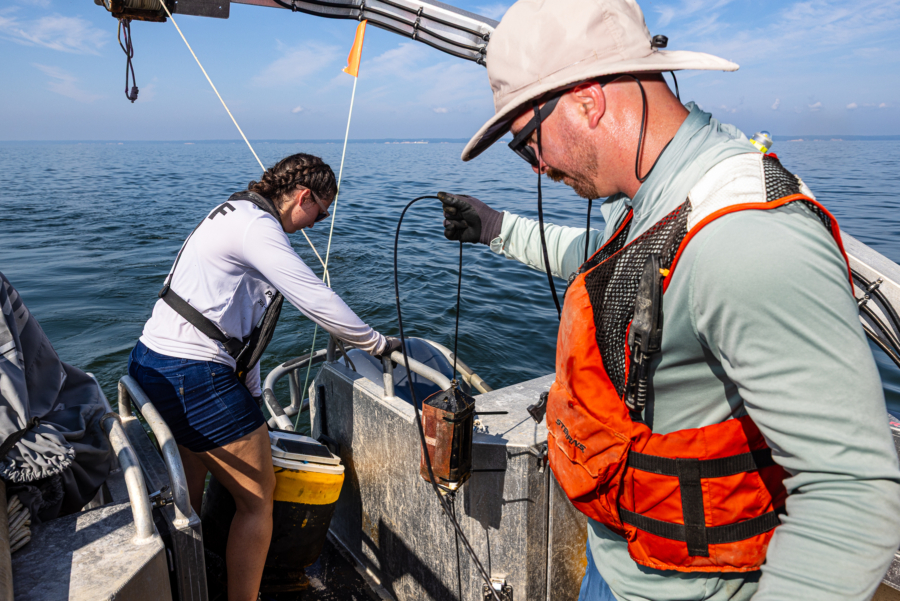
The buoys help us understand how dissolved oxygen levels fluctuate throughout the day at different depths over the course of the year to help detect hypoxia and dead zone development in the water. With three sites in both the Choptank and the Potomac rivers, the NOAA Chesapeake Bay Office is able to keep track of the dissolved oxygen levels at different parts of the Bay as the tributaries flow into the Chesapeake. The locations to track the water quality on both rivers were chosen by the Hypoxia Collaborative to indicate which areas would make the most sense to observe. The Choptank and Potomac rivers are also key spawning habitats for striped bass and these buoys also help track their presence.
The value of having buoys give real-time readings on dissolved oxygen across the Bay help state partners, who manage fisheries and regulations, to use this information to determine fishing risk to particular species, and for community members to use the data to validate their forecast tools.
“They'll be able to interpolate across those segments and get a better sense of how we are doing in this one location,” said Jay Lazar, physical scientist and observations program manager at the NOAA Chesapeake Bay Office. “We've got three sites out on the Choptank and this resolution of data helps the modelers better understand the variability in dissolved oxygen in the water column across these time periods.”
Every two weeks in the peak season of the summer, Lazar’s team has to make sure that the buoys are in good working order and that they are retrieving the data properly. With maintenance required year-round, the team often find themselves facing every sort of weather pattern imaginable. Today's team, composed of Lazar, Max Ruehrmund, an electronics technician with NOAA and Christina Shaner, member of the Chesapeake Conservation and Climate Corp, boarded the boat and sought out into the Bay’s still waters.
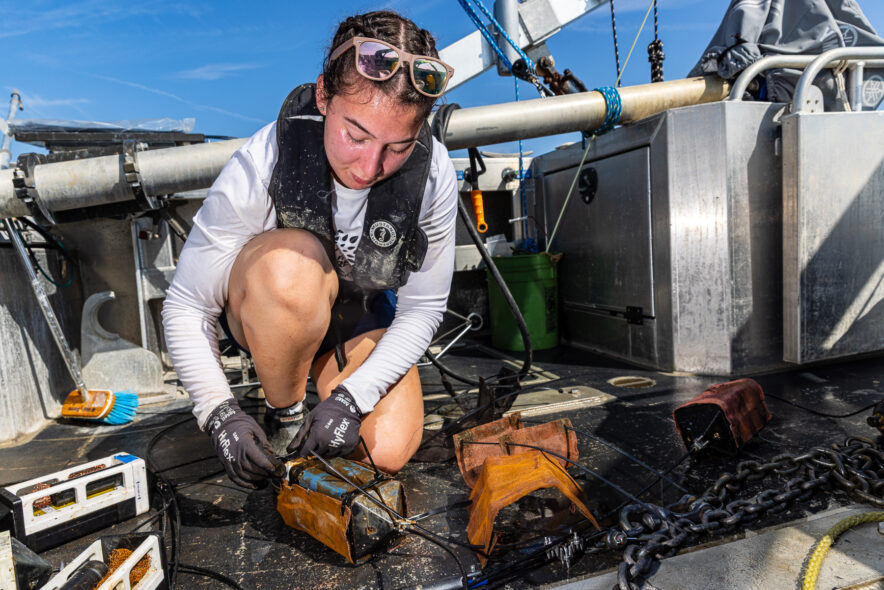
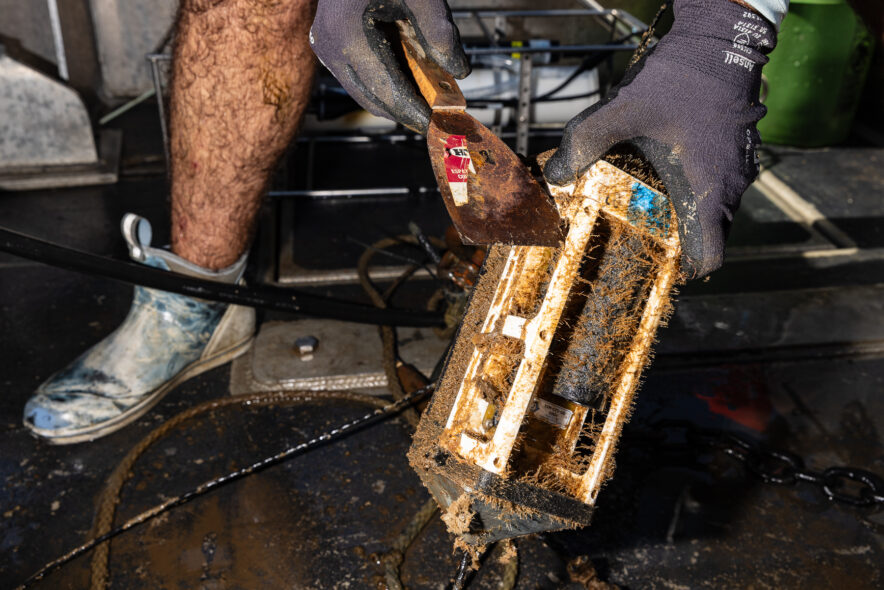
“We have optical sensors that need to have a clean space to be able to take the measurements, our conductivity cells need to be clear of any sort of fouling organisms and after a few weeks, there's algae and sediment build up,” Lazar said. “The two week intervals allow us to maintain and clean the sensors and ensure that the data quality is as good as it can be.”
With multiple sites on the Choptank River, the team tends to start early in the morning to try and avoid the peak of the heat mid day. Once they arrive at each location, they take an initial reading to measure the conductivity, temperature, depth and dissolved oxygen within the water column, to make sure readings are accurate. Once measurements are taken, the team removes the buoys and their sensors from the water and makes any necessary adjustments. Then the sensors are weatherproofed with copper wiring, which is toxic to the algae, to protect the inner workings.
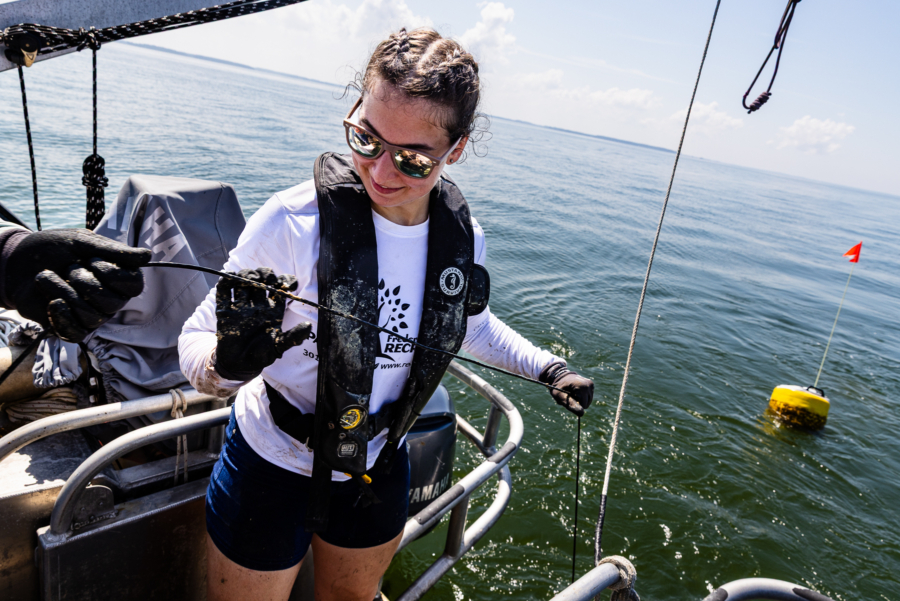
By having buoys in the water that give real-time readings year round, conservationists can better understand what’s causing dissolved oxygen to drop in parts of the Bay and potentially create plans to combat it.
“Everything that we care about in the Chesapeake Bay from a living resource perspective depends on oxygen availability in the water, " Lazar said. “Everyone that cares about the organisms in the water should care about dissolved oxygen.”
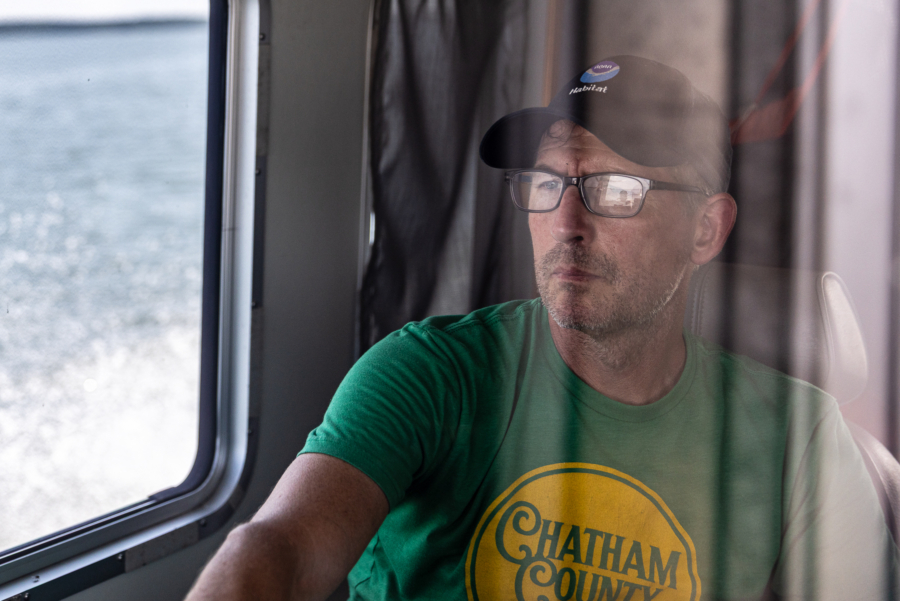
After the last buoy splashed in the water, the team gathered in the cabin and sped the boat back to the marina to wrap up the day.
Covered in mud and sweat, the team tied up the boat, washed the deck of any debris and hauled the equipment back into the truck. When everything was ready to go, the researchers hopped into the truck and cranked the air conditioning to recharge after another productive day on the Bay’s waters.
Comments
There are no comments.
Thank you!
Your comment has been received. Before it can be published, the comment will be reviewed by our team to ensure it adheres with our rules of engagement.
Back to recent stories