
My Clean Water Story: Walter Boynton
Boynton’s early research at the Chesapeake Biological Laboratory helped shape the Bay’s recovery plan
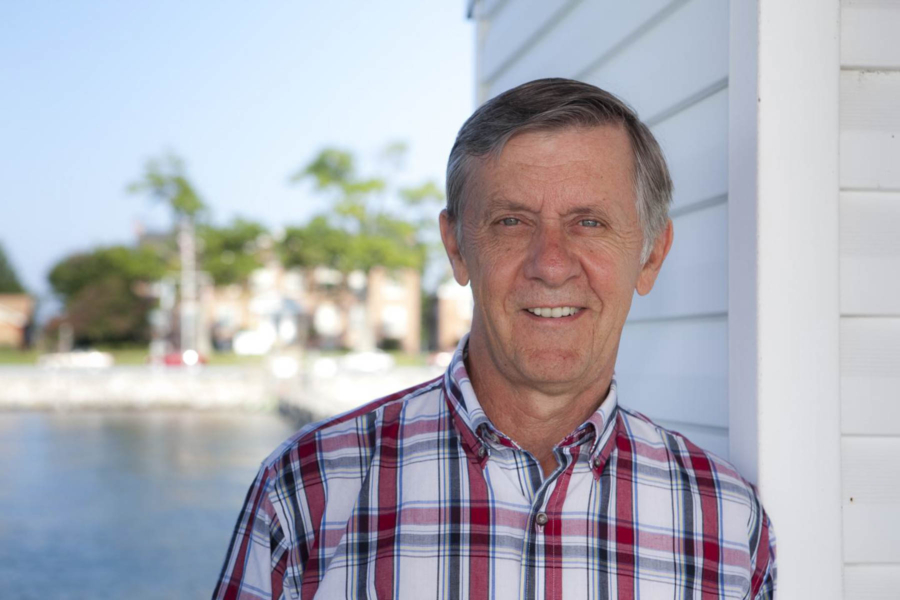
When Walter Boynton came to the Chesapeake Bay in 1975, the estuary was in bad shape.
For reasons that were unknown at the time, underwater grass beds were dying off, cutting off critical nursery habitat to crabs and fish and making low-oxygen conditions even worse. State and federal agencies were starting to come together to take on a range of issues related to the Bay. But they needed world-class scientists to figure out exactly what was going wrong.
Fresh off a doctorate in systems ecology, Boynton was among those who answered the call. His early research helped state and federal leaders develop a restoration strategy that is still in place today, beginning an influential career that spanned several decades.
From New England to Solomon’s Island
Growing up in a small town in Massachusetts, Boynton developed an early affinity for the outdoors.
“From an early age, we wound up doing a lot of camping and canoeing and other outdoor stuff,” Boynton said. “Ice fishing in the winter was a particular favorite.”
Boynton’s father worked as a commercial fisherman and would later pilot landing barges during World War II. During high school, the younger Boynton spent his summers teaching at an outdoors camp, and for college he studied environmental science at a school near home.
One day, Boynton got a letter saying that he’d been accepted for a summer job at the Chesapeake Biological Laboratory (CBL) in Solomon’s Island, Maryland, which his dad referred to as “the deep South.” Though the job was mostly administrative—”I basically ran the Xerox machine,” Boynton said— he was in constant contact with some of the region’s top environmental scientists.
Boynton met his future wife at CBL, and left the job with a renewed interest in environmental science and the Chesapeake Bay. After college, he earned a master’s in ecology and a PhD in systems ecology—both times studying under renowned environmental scientist Howard Odum. Upon completion of his doctorate, Boynton heard about an open position back at CBL and decided to apply. He and his wife decided to take the offer, figuring they’d “hang out there for a few years.”
“The ‘Let's hang around here for a few years,’ became a lifetime,” Boynton said.
Solving a mystery: What’s plaguing the Bay’s underwater grass?
Chesapeake Bay restoration was a buzzing field when Boynton joined CBL full-time in 1975. One of his first assignments studying the decline of striped bass eventually led to a commercial fishing moratorium in the 1980s and 90s that many say saved the fishery from complete collapse. But one of the most complex—and influential—projects Boynton worked on was investigating why the Bay had lost so much of its underwater grasses.
“At the beginning, there were six or seven ideas about why the grasses had disappeared,” Boynton said. “Our job was to sort through them.”
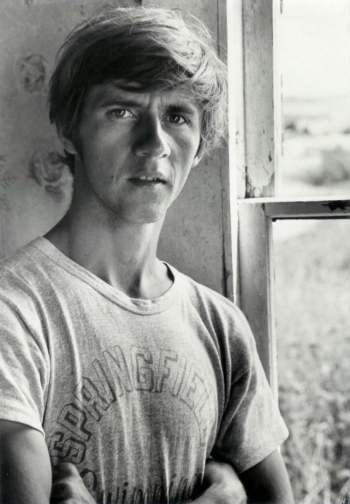
Working with a handful of other researchers at both CBL and Virginia Institute of Marine Science (VIMS), Boynton conducted field measurements, experiments and modeling to find out what was most likely causing the underwater grass die-off. Theories behind the decline ranged. Was chlorine from sewage treatment plants poisoning the grasses? Were stingrays uprooting the plants with their powerful fins? Some people even thought that the die-off was part of a natural cycle, and that nothing should be done about it.
Eventually, Boynton’s team weeded out the theories, and determined that the real reason for the underwater grass decline was the overabundance of nutrients in the water from sources like wastewater treatment plants and livestock manure. The nutrients, particularly nitrogen and phosphorus, were making the water cloudier, which blocked sunlight and limited plant growth. Additionally, the nutrients caused tiny organisms called epiphytes to grow on grass leaves, which blocked sunlight even further.
“Epiphytic growth on seagrass leaves was simply explosive,” Boynton said.
As part of this work, Boynton also conducted research to determine how important underwater grass was to the Bay. His team found that, in addition to providing habitat for blue crabs and fish, underwater grasses acted as “kidneys of the Bay,” trapping sediments at the bottom of the water and cycling nutrients out of the system. The team discovered that underwater grasses were “protein factories” that generate high amounts of small shrimp, clams, forage fish and other small organisms that are food for larger fish, crabs and waterfowl.
All of this research paved the way for a full-scale effort to restore the Bay’s grasses. By reducing nutrient and sediment runoff from across the Bay’s watershed, leaders could make the water more hospitable for underwater grass growth—a strategy that also limits the occurrence of low-oxygen “dead zones,” which also arise from an overabundance of nutrients.
This same strategy continues to guide us today.
Protecting underwater grasses, more than fifty years later
More than fifty years since Boynton began his research at CBL, considerable progress has been made toward protecting the Bay, even if some of the same problems still linger.
CBL’s early research inspired VIMS to conduct annual surveys of the Bay’s underwater grass, beginning in 1984. As of 2025, there were an estimated 89,385 acres of underwater grass in the Bay, which is about 50,000 acres higher than when the survey began and 18,000 acres higher than the long-term average. Experts say that the progress is largely due to practices that keep nutrients and sediment out of the estuary.
Looking back on his career, which included considerable research and teaching that goes well beyond Bay grasses, Boynton is optimistic about the Bay’s recovery.
For one, the cause and impact of nutrient runoff to the Bay is well-known and supported by science. “That means we know what we’re doing,” Boynton said.
The other reason is that, in parts of the Bay where there’s been a sharp decline in nutrient runoff, underwater grasses have recovered in just a few years.
“So if we do the right thing, we should see the results pretty quickly,” Boynton said.
The Chesapeake Bay ecosystem is large and complex, with mounting pressures like population growth and forest loss that make it more difficult to keep pollutants out of the water. But thanks to researchers like Boynton, partners are able to move the needle on a variety of issues.
“All of those things give me hope,” Boynton said.
Comments
So glad to see the bay coming back. At what point does it become swimmable again? ie abundance of Jellyfish and Nettles
Dear Friends and Colleagues, Walter Boynton passed away peacefully last night (15 Sept) surrounded by family. A celebration of life will be held sometime in the future at Kings Landing Park. Other details are not known at this time. Please spread the word.
Walter, thanks for the lifelong commitment to restoring the Bay. Much of the focus on nutrient and sediment reductions was inspired by your work. Lastly, I didn’t know you had been a member of a Boyband in the 1970s. Great photo.
Thank you!
Your comment has been received. Before it can be published, the comment will be reviewed by our team to ensure it adheres with our rules of engagement.
Back to recent stories