
Rappahannock Tribe celebrates the rematriation of 969 acres of ancestral land along Fones Cliffs
Reacquiring Fones Cliffs fosters big plans for the conservation of Rappahannock land and history
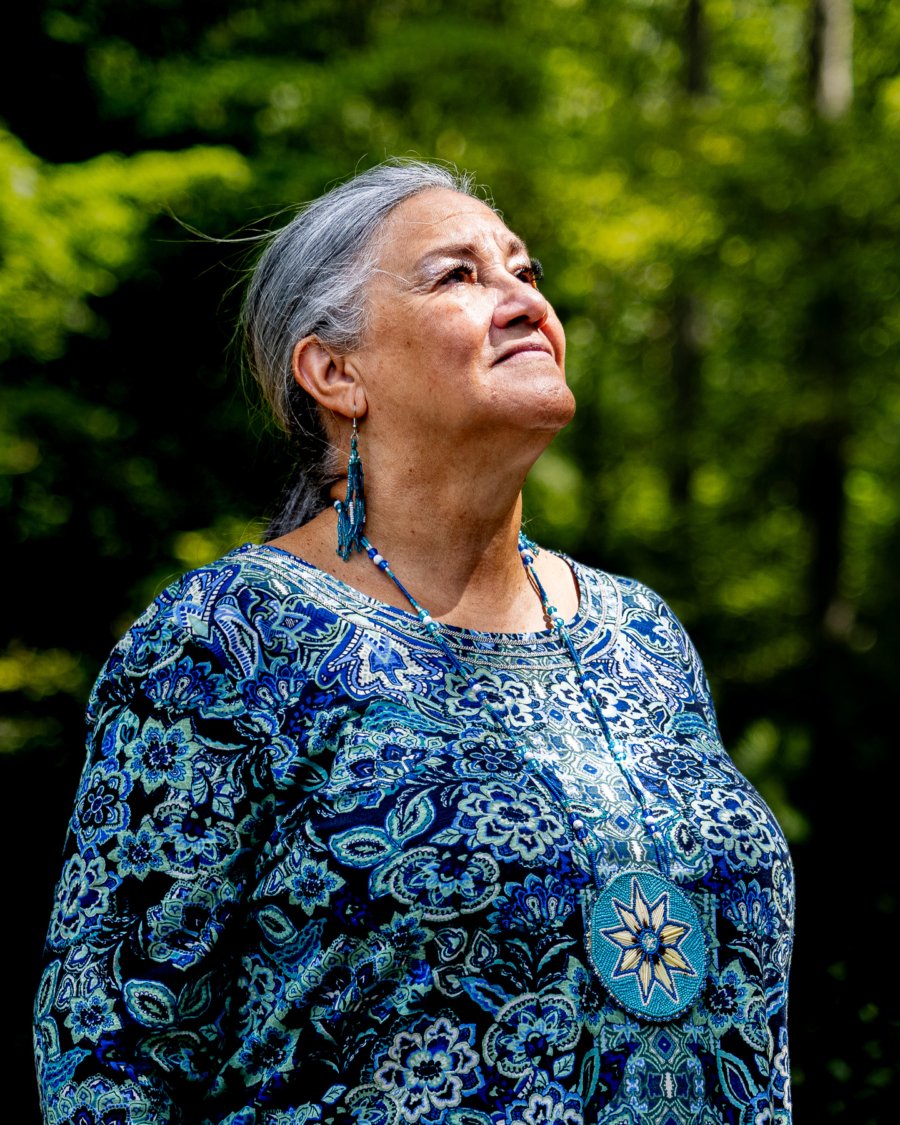
On a summer morning in Richmond County, Virginia, leaders of the Rappahannock Tribe gathered to celebrate the reacquisition of 969 acres of ancestral land. Held at the Rappahannock Tribe Indigenous Conservation Education Center, the event marked a recent milestone in a decades-long effort to preserve parts of Fones Cliffs and return the land to tribal members.
“It's surreal because our tribe has been fighting for so long and to see the victory of something like this after years and years of sacrifice is really spectacular,” said Chief Anne Richardson of the Rappahannock Tribe. “It was a fight, it was a dream and it was a vision but it took all of us together to collaborate to get it done.”
Fones Cliffs is a four-mile stretch of deeply forested cliffs that hangs more than 100 feet above the Rappahannock River, one of the largest tributaries of the Chesapeake Bay. The Rappahannock Tribe lived on this land in three separate villages and defended it against English settlers during the early 1600s.
The property acts as a buffer that protects the waterway from runoff, and is also home to wildlife such as osprey and bald eagles. Keeping the land in its natural state is also the best way to protect the cliffs from erosion.
Over the past decade, tribal leaders and conservation groups have been raising funds and placing parts of Fones Cliffs into conservation easements in order to protect it against proposed development. In 2022, Chesapeake Conservancy was a key partner in the rematriation of 465 acres of the Tribe's ancestral homeland at Fones Cliffs.
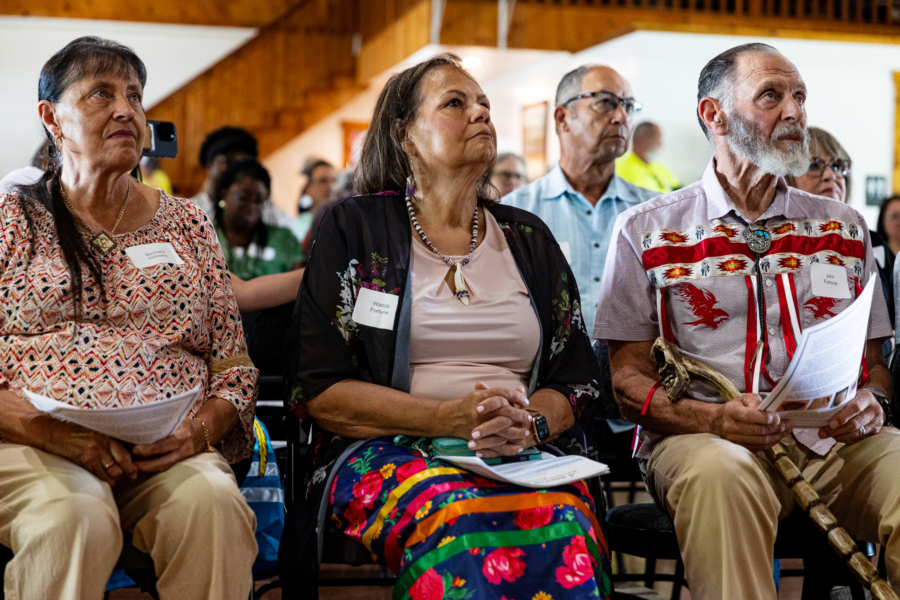
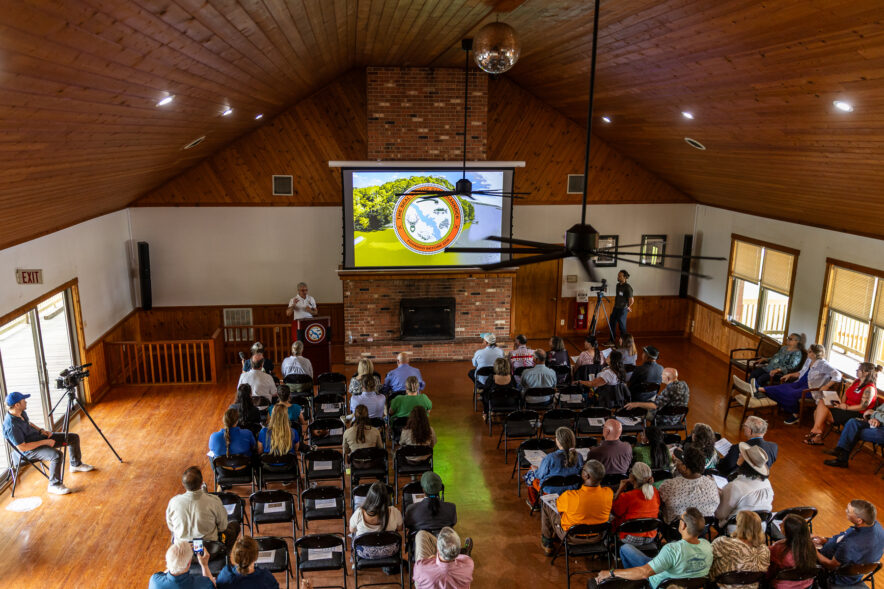
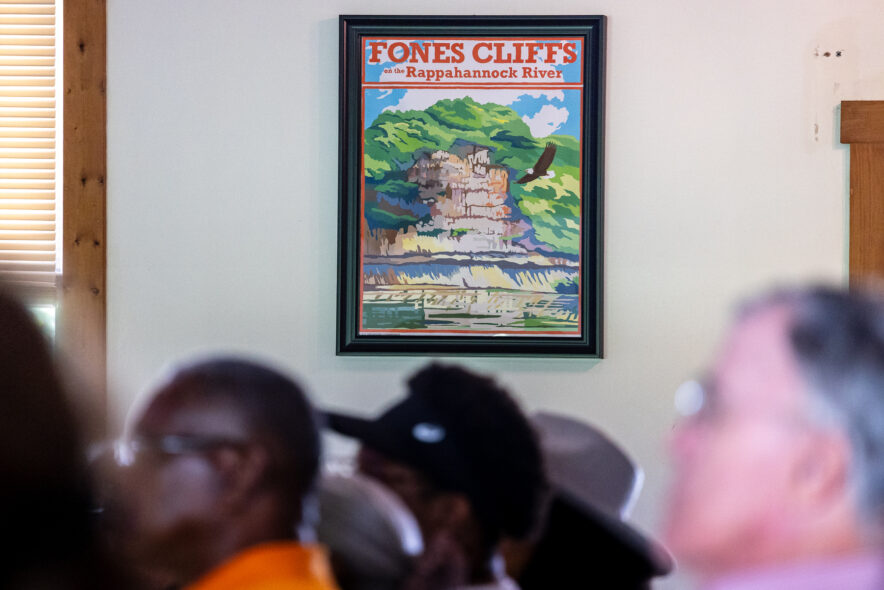
Most recently, partners came together to purchase a 969-acre section of Fones Cliffs that was slated to be turned into a golf course. In December 2022, The Conservation Fund purchased the property in a bankruptcy auction and held it for two years until the tribe was able to raise enough money to buy it from them. With the tribe leading the way to protect this land, they placed conservation easements with the U.S Fish and Wildlife Service (USFWS) and historical easements with the Virginia Department of Historic Resources to make sure that the land will be protected forever, not only for its conservation, but also its historical value for both tribal and non-tribal research.
“There is hope in this place; it continually nourishes and renews, and it has been humbling for me to see how the tribe cultivates this rule through thoughtful and careful stewardship of the land and its resources,” said Wendy Musumeci, easement program coordinator with the Virginia Department of Historic Resources. “Thinking about the power of strong communal memory, meeting with members of the tribe and staff to learn what the land means to them–I feel truly blessed to be a part of the change that the tribe's ownership has and will continue to bring to this landscape.”
Before purchasing the property, tribal leaders worked closely with Dr. Julie King, a professor of anthropology at St. Mary's College of Maryland, to map culturally significant landscapes along the river. The team at St. Mary's College studied Captain John Smith’s maps, made excavations and analyzed artifacts to help locate the tribe's historic communities. They also used GIS technology, research and oral history to give a greater context to the relationship between the tribe and the land, such as their position on the river, access to food and using the river as a resource for transportation.
As mentioned during the 2025 reacquisition ceremony, tribal leaders are working on restoring streams and habitat along the Rappahannock. The tribe is paying particular attention to oysters and river herring, which were a major resource for them historically, but have seen significant population loss. Tribal leaders have worked with the USFWS and other partners on releasing river herring and juvenile oysters in the river.
“Indigenous knowledge is so important to the protection and the maintenance of the Bay and all of its watersheds,” Chief Richardson said. “We want to integrate our traditional knowledge because it's been proven by science that it is the optimum way to protect the land and we want to integrate that into Western science so future generations will know and revere those two systems working together collaboratively to protect and restore, so they can swim and eat fish from clean water.”
The Rappahannock Tribe also sees this as an opportunity to educate tribal members, particularly the younger generations, on their connection to the land. The tribe hopes to expand their educational programs at the Indigenous Conservation Education Center, including classes on the importance of conservation, native species and the medicinal property of plants.
“Future environmentalists need to be birthed and trained so that they can carry forth into the future protecting and preserving those things that are so sacred to all of us,” Chief Richardson said. “Now we are able to train our children and then they will carry on and teach others about the protection and the stewardship of these great places, if we don't do it now, all will be lost.”
Comments
What a wonderful gift for the Rappahannock Tribal citizens. To once more have their Tribal lands back in their hands to live and cherish. Much love to you all
Thank you!
Your comment has been received. Before it can be published, the comment will be reviewed by our team to ensure it adheres with our rules of engagement.
Back to recent stories