
Renowned oceanographer Dr. Sylvia Earle brings global attention to the Bay as a "Hope Spot"
How will the designation enhance the Chesapeake Bay restoration movement?
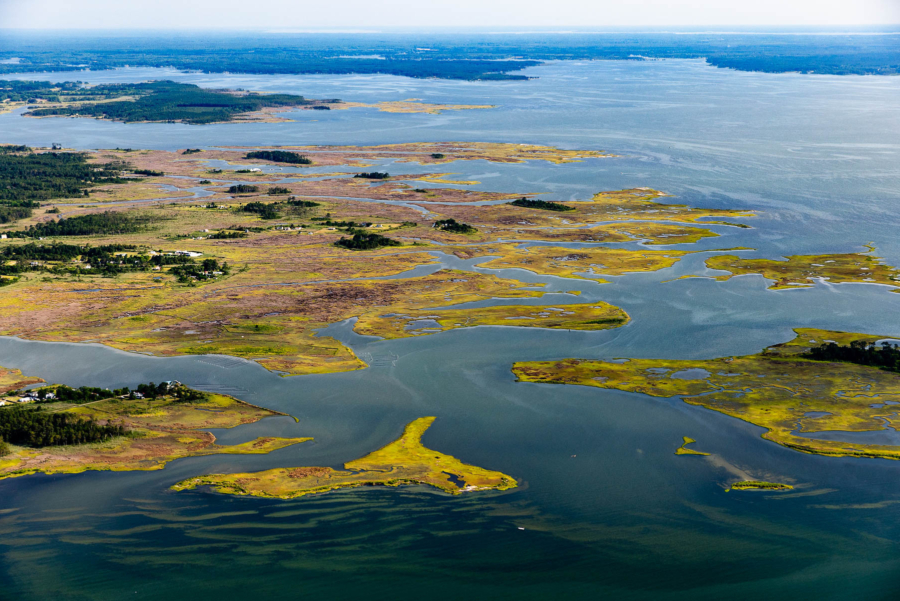
From the Great Barrier Reef to the Galápagos Islands, Mission Blue has identified Hope Spots ® in some of the world’s most vital and vulnerable marine ecosystems—ones crucial to the health of our world’s oceans.
Founded by oceanographer and explorer Dr. Sylvia Earle, the organization works to spotlight these places, building public support and encouraging leaders to strengthen marine protection.
In 2025, the Chesapeake Bay was added to that prestigious list, linking the estuary with a global network of marine ecosystems and people working to protect them.
“The Chesapeake Bay is one of the world's great estuaries—a place where land, water, wildlife and people are deeply connected,” said Dr. Earle. “Designating the Bay as a Hope Spot recognizes not only its extraordinary ecological importance, but also the commitment of the many communities, scientists, Indigenous leaders, educators, and conservationists working to restore and protect it.”
But what does the designation entail? And how will that help advance the estuary’s protection?
The Hope Spot designation
Unlike marine monuments, marine sanctuaries and other sites officially protected by governments, Hope Spots do not restrict activities within their borders. Rather, they’re a public awareness tool created by Mission Blue to inspire and accelerate public support for the protection of marine environments.
Mission Blue serves as an international advocate for its Hope Spots, influencing policymakers, championing local conservation leaders and helping accelerate progress toward stronger marine protections. The organization supports on-the-ground organizations and universities, known as “Hope Spot Champions” who help to advance community engagement, research, partnerships and outreach on behalf of the Hope Spot designations.
Chesapeake Bay’s Hope Spot Champions
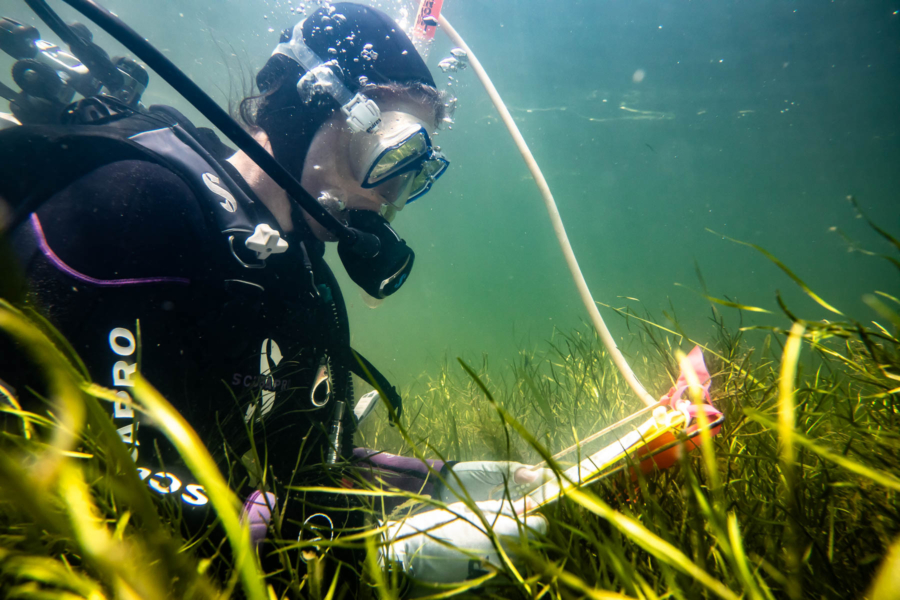
The Chesapeake Bay was nominated for a Hope Spot designation by The Explorers Club and the Paul S. Sarbanes Coastal Ecological Center with the University of Maryland Eastern Shore (UMES)—both of which now serve as Hope Spot Champions.
Headquartered in New York City with local chapters around the world, The Explorers Club is a nonprofit that promotes scientific exploration through events, visual storytelling and grant funding. In May, 2025, members of the organization led an expedition off Gwynn's Island, Virginia, in honor of an expedition led by Gilbert Klingel and National Geographic in 1954.
“The Hope Spot designation is the latest in the Club’s engagement in the Chesapeake Bay area, and provides renewed recognition of research and exploration into the important ecosystems, habitats and history of the Bay,” said Explorers Club member Constance Difede, who led the Chesapeake Bay Hope Spot designation team.
Located just a few miles from the shores of the Chesapeake Bay, the Paul S. Sarbanes Coastal Ecology Center is the second Hope Spot Champion. The center is a teaching, research and public outreach facility that houses initiatives related to the conservation, restoration, and understanding of the natural ecology and living resources of Maryland’s coastal waters. Dr. Stephen Tomasetti, director of the Paul S. Sarbanes Coastal Ecology Center, serves as the Hope Spot representative who helped secure the Bay’s Hope Spot designation.
“The Hope Spot designation is a timely recognition of both the Chesapeake Bay’s ecological significance and the broad coalition working to support its recovery,” Dr. Tomasetti said. “Our work — restoring oyster reefs and seagrass meadows, rebuilding shellfish populations, and partnering with coastal communities — aims to ensure the Bay remains a source of life, identity, resilience, and leisure. This designation furthers that momentum.”
Hope Spot designation brings partners together
One reason the Chesapeake Bay was chosen as a Hope Spot was because of the large network of organizations working together to protect it. In 2025, Mission Blue took steps to put those partnerships into work when it funded a restoration project carried out by UMES and the Rappahannock Tribe.
“As part of the Hope Spot, the Rappahannock Tribe and the University of Maryland Eastern Shore have received a Mission Blue grant to revitalize oyster beds on a 74-acre historical oyster bed on the Rappahannock River to support tribal jobs and create essential fisheries,” said Chief Anne Richardson of the Rappahannock Tribe.
During The Explorers Club expedition to the Bay in 2025, the Mathews Land Conservancy hosted an event bringing in community members to meet the scientists and divers. Bernadette La Casse, the president of the Board of Mathews Land Conservancy, believes that the Hope Spot designation can continue to connect environmental groups and community stakeholders who care about the Bay.
“My hope is the designation fosters more collaboration for the hundreds of entities already out there; they may not be leveraging each other the best they can to get to a better end result for the Bay,” La Casse said.
The Hope Spot designation has come at a critical time for the Chesapeake Bay as state and federal leaders updated the Chesapeake Bay Watershed Agreement with new goals and commitments related to the health of the watershed.
Mission Blue’s Hope Spot designation will bring even more attention to the Bay’s regional restoration effort and the Bay’s importance to the world’s oceans—highlighting the potential for partnership to accelerate progress in restoring a national and global treasure.
This blog is part of a series of stories about Chesapeake Bay designations written by staffers at the Chesapeake Research Consortium. Its authors recently published a report investigating marine protected areas in the Chesapeake Bay.
Comments
There are no comments.
Thank you!
Your comment has been received. Before it can be published, the comment will be reviewed by our team to ensure it adheres with our rules of engagement.
Back to recent stories