
Skeleton shrimp
(Caprella spp.)
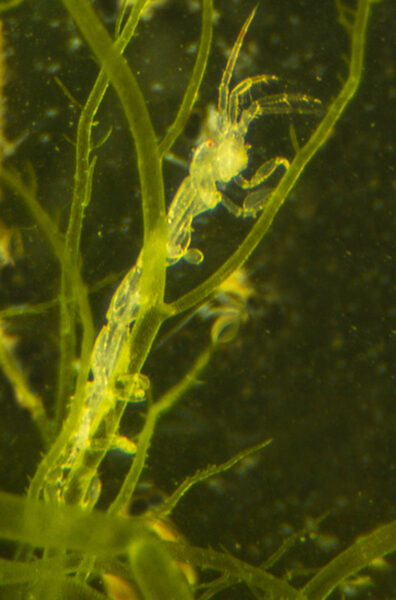
Skeleton shrimp are tiny, gangly amphipods with transparent, stick-like bodies. They live attached to sponges and vegetation in the middle and lower Chesapeake Bay.
This section shows one large critter image at a time. Use the thumbnails that follow to select a specific image to display here.
This gallery contains a grid of small thumbnails. Selecting a thumbnail will change the main image in the preceding section.
Appearance
Skeleton shrimp have long, gangly, stick-like bodies. Their bodies are usually transparent, but may vary in color from tan to brown to reddish. They have hooked, grasping rear legs and folded front legs, similar to a praying mantis. They grow to be between one-half inch to two inches in length.
Feeding
Skeleton shrimp eat copepods, algae and detritus. They use their front legs to capture their food.
Reproduction and life cycle
Skeleton shrimp reproduce sexually. Females carry large, transparent egg pouches on their abdomen. Some females may kill males after mating by injecting them with venom from a poisonous claw. After hatching, juveniles immediately attach to hydroids or vegetation. Females are believed to live for one year.
Did you know?
- Skeleton shrimp move along hydroid branches similar to the way inchworms crawl.
- Some species of skeleton shrimp can change color to blend in with their background.
Sources and additional information
- Life in the Chesapeake Bay by Alice Jane Lippson and Robert L. Lippson
- Skeleton Shrimp – Monterey Bay Aquarium