
A church's green transformation, years in the making
Parishioners have fueled the effort to add shade and manage stormwater
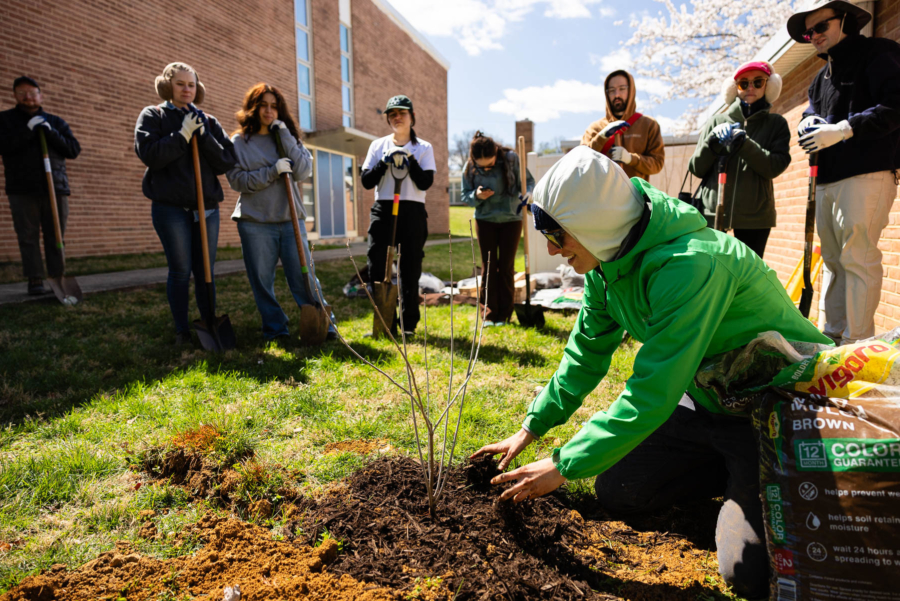
A couple miles north of Washington, D.C., lies the densely-populated suburb of Wheaton, Maryland. Surrounded by neighborhoods and a local park is St. Catherine Labouré Church, home to a Catholic parish founded in 1951. On a Saturday in late March, several families in the congregation and other volunteers gathered there to plant trees.
“I think in general, trees are just the best thing in the world,” said Jillian Everly, a forests projects coordinator with the Alliance for the Chesapeake Bay, addressing the group as it gathered. “They're really good in cities for reducing the urban heat island effect, and they're really great for reducing erosion…There’s nothing trees can’t do.”
The event was the church’s second time participating in Treelay, a day-long tree planting marathon across Maryland, Virginia and Pennsylvania.
For the past several years, St. Catherine, the largest parish in Montgomery County, has been transforming its sloping, 10-acre campus, adding not only trees but native plants of all kinds, along with rain gardens and other measures to reduce stormwater pollution.
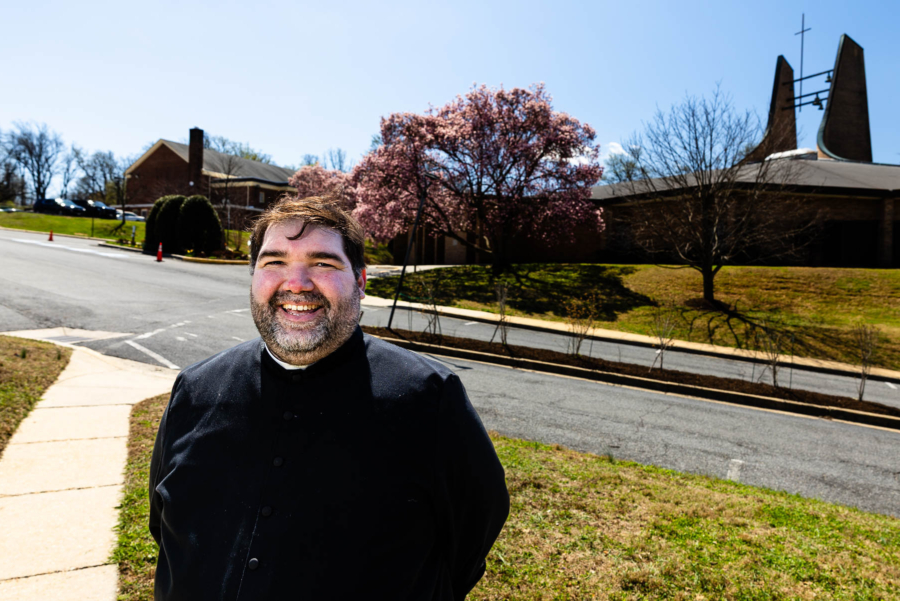
The pastor at St. Catherine, Rev. Francisco E. Aguirre, said his predecessor first made him aware of stormwater issues on the grounds, such as flooding and soggy spots near the church and rectory. Then an unexpected call from Ruby Stemmle, the executive director of the nonprofit ecoLatinos, set progress in motion.
“Sort of out of the blue, ecoLatinos got in touch with us and said, ‘Hey, would you be interested in looking for opportunities to try to promote the care of the environment?’” Aguirre said. “I was like, ‘I'm thrilled. I'd love to.’”
Through ecoLatinos, Aguirre connected with another nonprofit, the Alliance for the Chesapeake Bay. In 2021 and 2022, a pair of grants from the Chesapeake Bay Trust (CBT) funded a partnership effort by the two organizations and the Montgomery County Department of Environmental Protection (DEP) Rainscapes program.
One grant for $90,000 awarded to the Alliance funded rain gardens, conservation landscaping, native trees and rain barrels—practices that mimic natural processes to capture and treat stormwater using what’s called green infrastructure. In total, the plantings and installations manage stormwater runoff from over 17,000 square feet of church grounds.
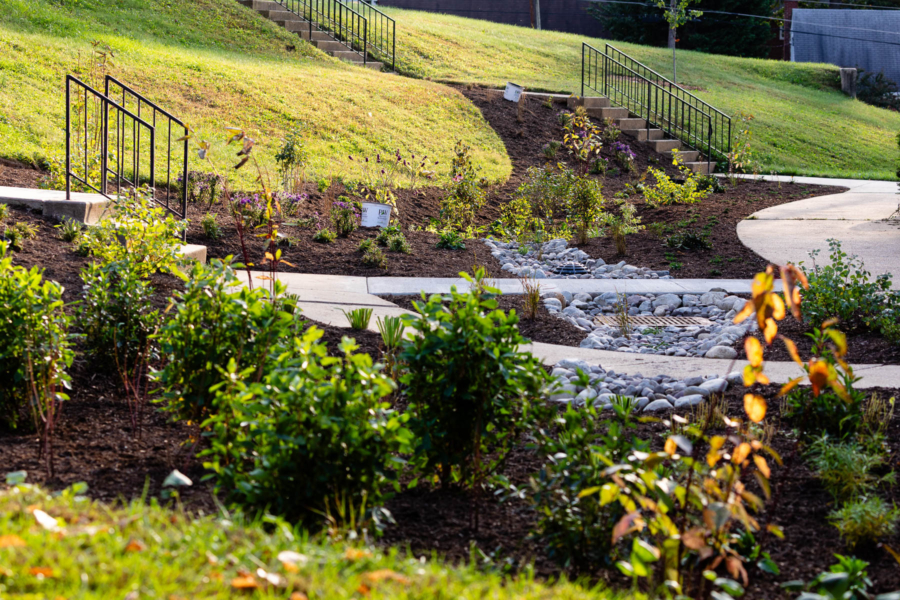
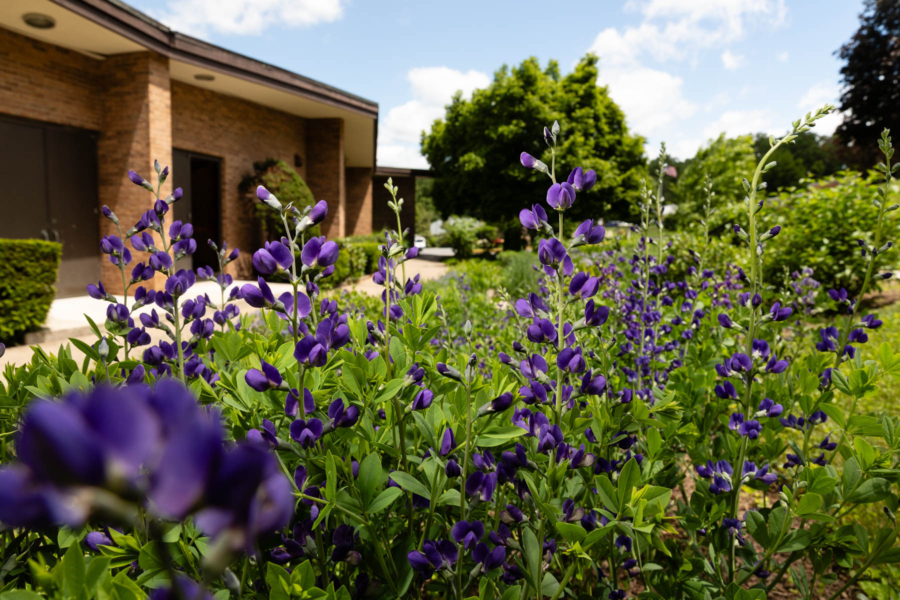
Another grant for nearly $30,000 to ecoLatinos supported five in-person training events as well as online sessions that helped establish St. Catherine’s green team. Parishioners and volunteers learned about how to care for their new stormwater-friendly landscaping, how their efforts would benefit waterways and how they could add rain gardens and other measures at home through Montgomery County’s Rainscapes program. Outreach by both organizations was conducted in both English and Spanish, mirroring the church’s bilingual services.
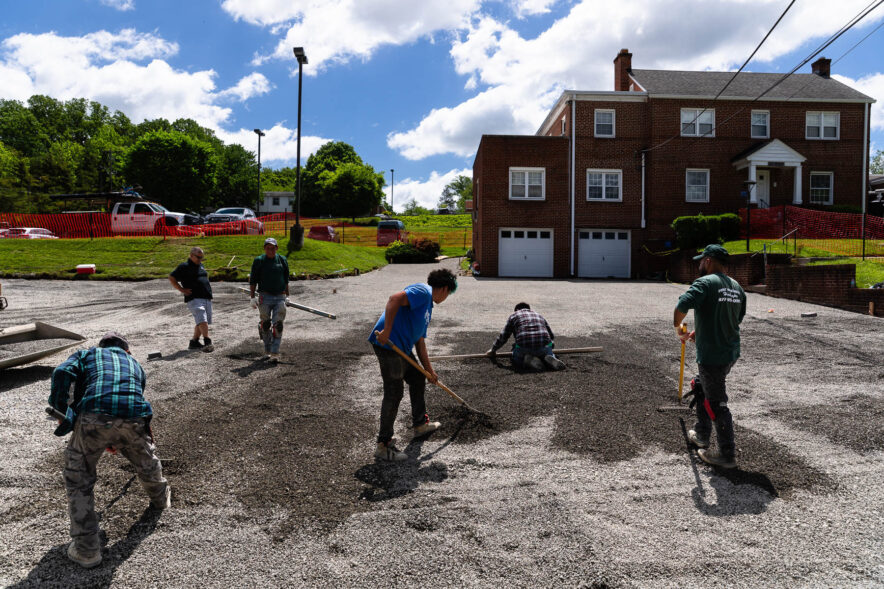
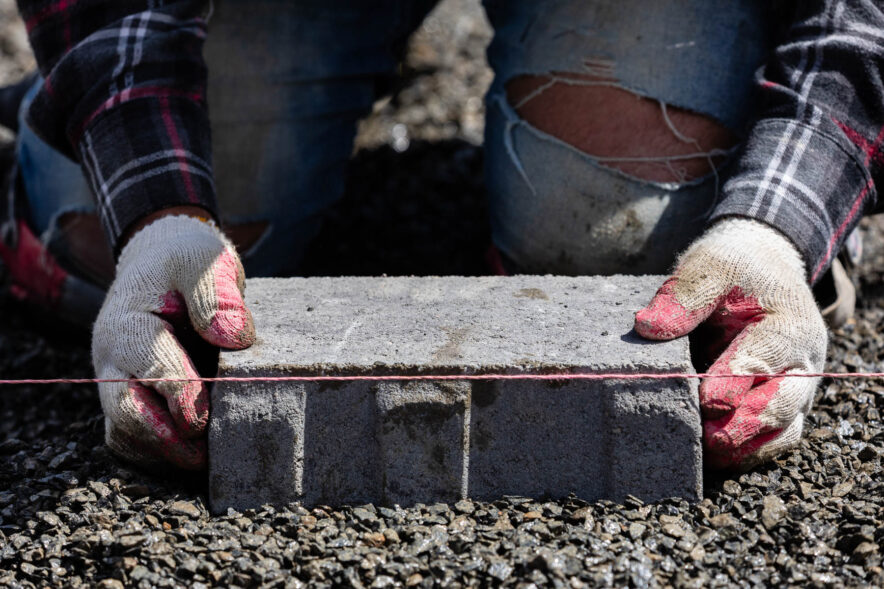
Building on the first grants, in 2023 CBT awarded the Alliance another $185,000 grant funded by the Environmental Protection Agency through the Green Streets, Green Jobs, Green Towns Grant Program. That funding covered the cost of replacing an aging parking lot with one made with permeable pavers, allowing stormwater to flow directly into the ground instead of onto the adjacent street.
Erin O’Grady, the Alliance’s D.C. Regional Director, said that constant communication and strategic engagement have helped the Alliance maintain a consistent presence and a successful five-year relationship with St. Catherine as its needs have evolved.
“Parish priorities, such as site beautification, mitigating standing water and volunteer opportunities, are integrated into every implementation project,” O’Grady said. “Looking to the future, our team recognizes further opportunities to address hillside erosion and maintain current installations.”
Overall, Rev. Aguirre said that the years-long transformation has been appreciated by the congregation and others.
“It's really nice, all the plantings.” Aguirre said. “The parishioners enjoy it, more immediately and constantly. But those who have been away for a while and come back, I think it's one of the things they definitely notice.”
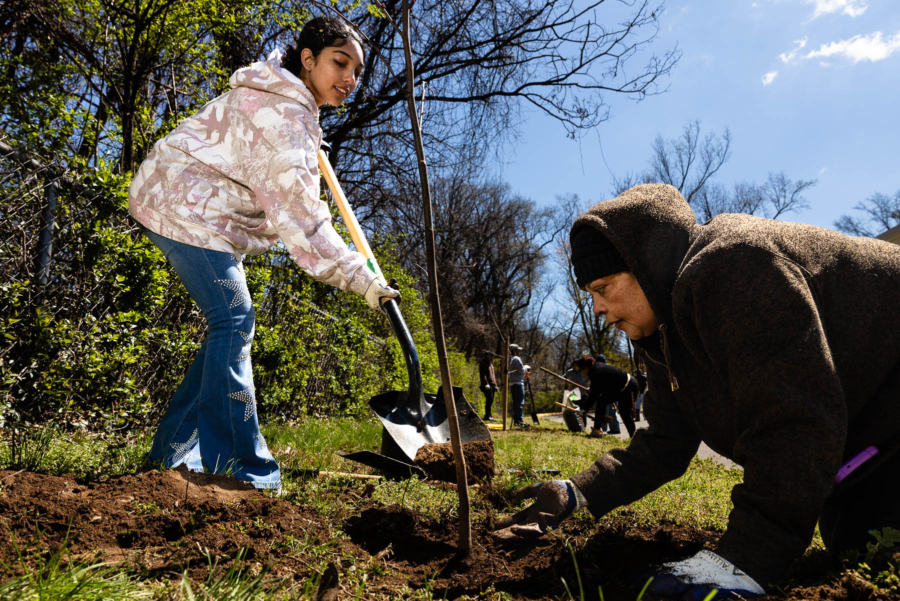
At the Treelay event, organized by the Alliance, several young volunteers were earning volunteer hours as part of their preparation for Confirmation. This included Mary Ellen Perez, 14, who received guidance from her mother, Susani Perez, while spreading mulch around the redbud they had just planted.
Susani recalled doing similar work with her father on a commercial nursery after arriving in the United States from Mexico in the early 1980s. As agricultural workers, her family qualified for permanent residency under legislation signed by President Ronald Reagan in 1986.
“That’s how I got my green card,” Perez said.
Eventually, all the volunteers broke through the rocky, compacted urban soil to make space for their trees. Everly helped pound support stakes into the ground and encouraged volunteers to name their tree, eventually making her way to Mary Ellen and Susani.
“What do you want to name it?” Everly asked.
“Taylor!” said Mary Ellen, a Taylor Swift fan, without hesitation.
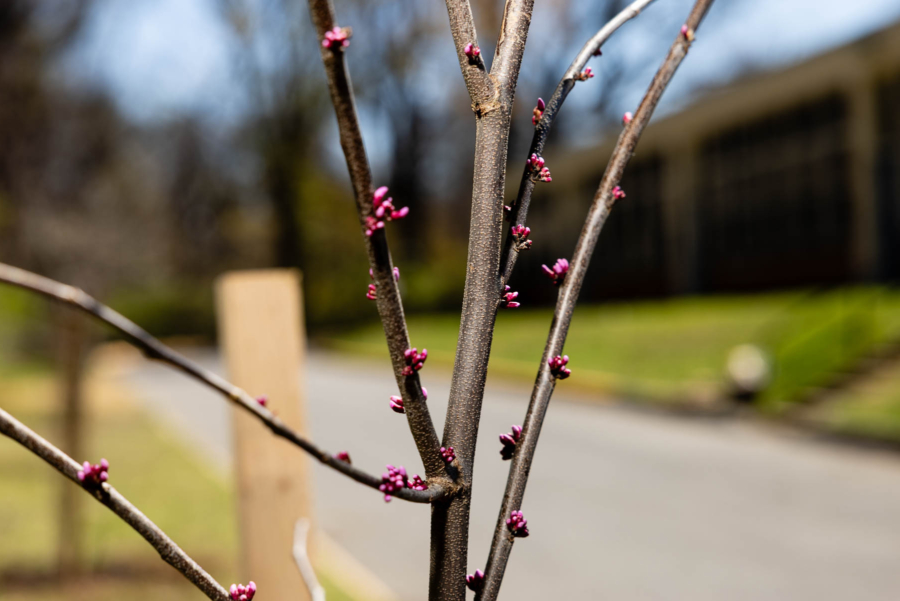
Taylor the redbud stood with other new trees and shrubs—dogwood, serviceberry, paw paw and southern arrowwood viburnum—swaying with tiny emerging spring flowers. Eventually their shade will cool the church grounds while soaking up stormwater with their roots. But for now, they need protection. So Everly showed the two volunteers how to tie the tree to its supports.
“You can visit Taylor every time you come to church,” Everly said.
Comments
There are no comments.
Thank you!
Your comment has been received. Before it can be published, the comment will be reviewed by our team to ensure it adheres with our rules of engagement.
Back to recent stories