
Algal Turf Scrubbers put to test on the Anacostia River
New technology mimics coral reef nutrient removal
For those boating on the Chesapeake Bay this summer, bright blooms of algae are a familiar sight. Although algae is naturally occurring, an overabundance can lead to harmful algae blooms that suck oxygen out of the water, causing suffocating “dead zones.” Now with the help of tools like the Algal Turf Scrubber, scientists are transforming this threat into a solution that cleans waterways.
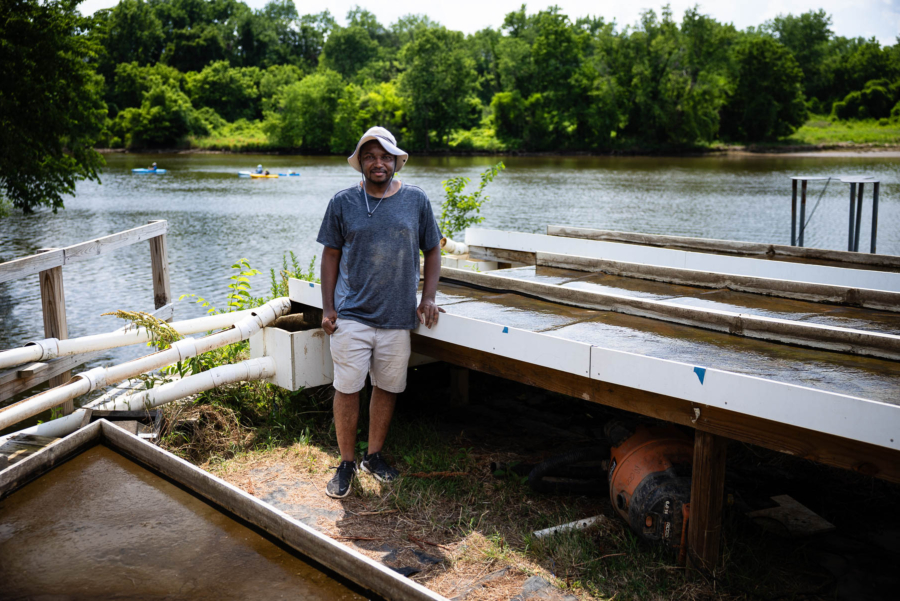
Along the sweeping shoreline of the Anacostia River, ecological engineering firm Green Mechanics has installed an Algal Turf Scrubber at Bladensburg Waterfront Park. Developed in partnership with the Maryland-National Capital Park and Planning Commission and the University of Maryland Algal Ecotechnology Center, the system uses algae to continuously clean river water, removing harmful nutrients and chemicals. Meanwhile, by growing algae in a controlled environment, the system adds oxygen back into the water instead of removing it.
Invented by Dr. Walter Adey at the Smithsonian, the Algal Turf Scrubber at Bladensburg Waterfront Park pumps water from the Anacostia across open beds that are filled with naturally growing algae. Mimicking the behavior of coral reefs, the algae soaks up nutrients, sediment, and chemicals from the water, while releasing considerable amounts of dissolved oxygen as it grows. The cleaned, oxygen-rich water then discharges back into the river creating a haven for local fish and crabs.
“This [system] is, I think, one of the most elegant forms of ecotechnology and ecological engineering,” said Dr. Peter May, Chief Scientist and Ecological Engineer at Green Mechanics. “It's just creating the conditions, letting algae do its job. You know, gravity, sunlight, photosynthesis.”
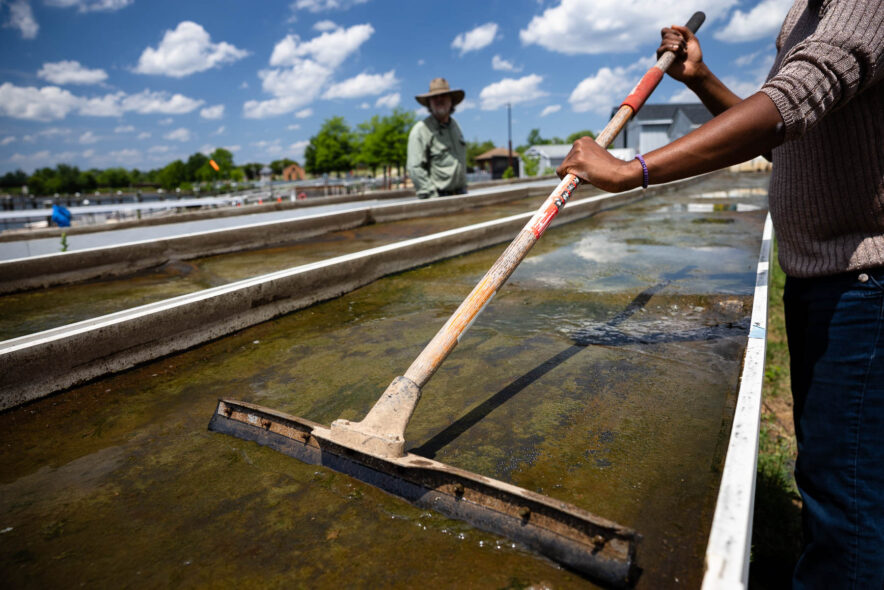
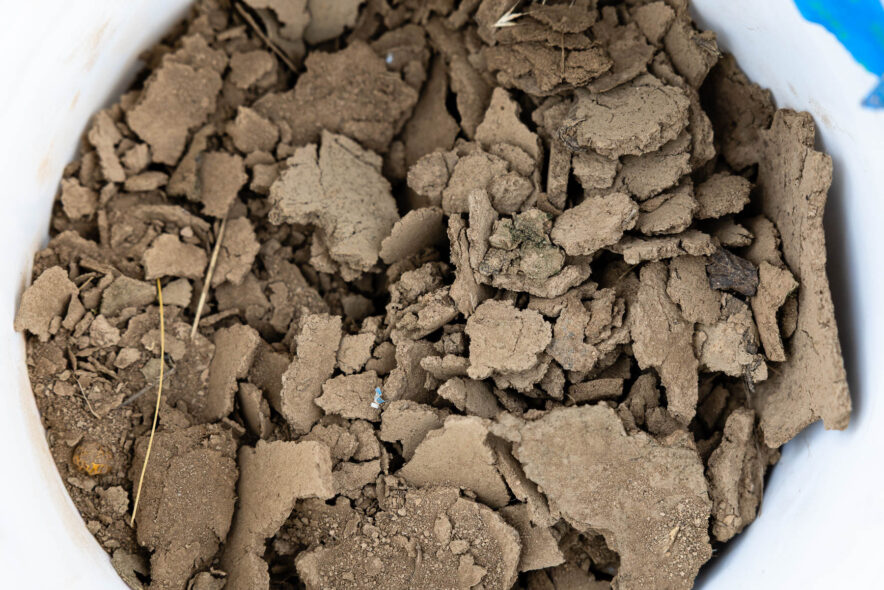
After a week, the algae is scraped from the beds, dried, burned to ash to remove carbon, and weighed to measure how much nutrient pollution and sediment has been taken out of the Anacostia. According to Green Mechanics, a single acre of this technology can extract roughly 1,000 pounds of nitrogen, 140 pounds of phosphorus, and 40 tons of sediment per year.
Algal Turf Scrubbers recently became an approved Best Management Practice that states can implement to help meet their pollution reduction goals in the Chesapeake Bay Total Maximum Daily Load. At Bladensburg Waterfront Park, the Algal Turf Scrubber helps make up for the stormwater runoff that comes off the parking lots and nearby roads, while contributing to the long-term effort to clean up the Anacostia, which was given a “D” rating by the Anacostia Watershed Society in 2025.
“This technology, pound per pound, square foot by square foot, is the most powerful, best management practice for [Chesapeake Bay Total Maximum Daily Load] and nutrient reduction approaches,” said Larry Davis, Co-Founder and Lead Consultant at Green Mechanics.
Another benefit of the Algal Turf Scrubber is that it can be easily set up using reusable materials. Designed as a low-cost, low-complexity system, it can be easily taken apart and relocated between sites.
“We're using pumps, PVC, and PVC wood, [and] two by fours to create a low economic footprint system, but with a high ecological and social impact; as this is a great invitation for volunteers and environmental education and students from the University of Maryland,” explained Davis.
Although this Algal Turf Scrubber is just a pilot system, Davis and his team at Green Mechanics have already begun exploring ways the harvested algae could be used if adopted at a larger scale. Vincent Murray, a rising senior at University of Maryland working with Davis, has conducted market research that shows how the harvested algae can be used by farmers as organic fertilizer or soil amendments. Additionally, the team says that the harvested algae can be transported to local concrete facilities to serve as a sustainable, carbon-sequestering additive for manufacturing green cinderblocks.
Green Mechanics have already developed a prototype of the cinderblock additive, made from harvested algae, hemp hurds, and bamboo.
”This is kind of a prototype [shows] that there are other avenues to utilize the algae in addition to the water quality benefits,” Davis said.
Comments
There are no comments.
Thank you!
Your comment has been received. Before it can be published, the comment will be reviewed by our team to ensure it adheres with our rules of engagement.
Back to recent stories