
American bullfrog is a formidable predator with a big croak
This amphibian can grow up 16 inches with its legs fully extended
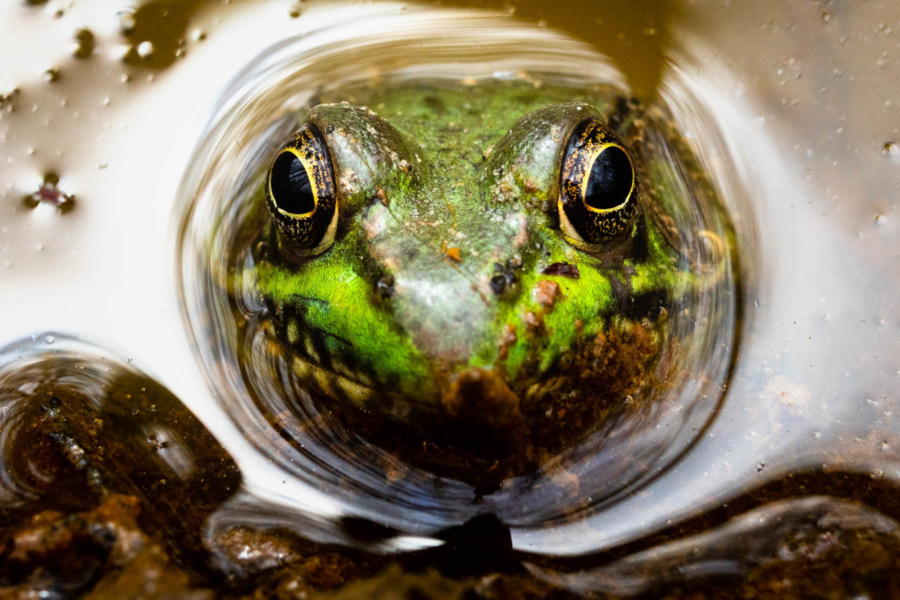
Lurking in the freshwater rivers, streams, wetlands and ponds of the Chesapeake Bay watershed is one of North America’s largest frogs and most voracious predators.
The American bullfrog (Lithobates catesbeianus) can grow up 16 inches with its legs fully extended and weigh up to a pound, making it a nice snack for predators and formidable hunters of smaller prey.
The amphibian has two large eyes on top of its head, which provide a great field of vision, and an external eardrum (called a tympanum) that picks up sound from all directions. American bullfrogs also have nostrils high on their head so that they can rise just above the surface of the water to breathe as they look for prey and predators.
When it comes time to spring into action, American bullfrogs have very powerful legs that allow them to jump 6-7 feet toward prey or away from predators.
“These guys are one of the most voracious predators that we get in Pennsylvania,” says Harrison Black of The Wildlife Brothers. “These guys do not discriminate when it comes to their prey items.”
With a wide mouth, American bullfrogs can consume all sorts of animals, including fish, crayfish, insects, other amphibians, small reptiles, and small birds and mammals. They are typically hunted by herons, snakes, snapping turtles and raccoons.
The amphibian is well known for its deep, resonant “jug-o-rum” croak that can carry for more than half-a-mile. Only males croak, and they do so to attract mates and establish territory. American bullfrogs croak by breathing in, closing their nostrils, and then forcing air backwards and forwards between their lungs and vocal sack.
Any park with freshwater rivers and streams can be a good place to find American bullfrogs, such as Jug Bay Wetland Sanctuary in Maryland and Trap Pond State Park in Delaware. You may need to look closely because the frog's green color often camouflages it against algae-filled water and other vegetation.
To learn more about other reptiles and amphibians that can be found in the Chesapeake Bay watershed, check out our field guide.
Comments
There are no comments.
Thank you!
Your comment has been received. Before it can be published, the comment will be reviewed by our team to ensure it adheres with our rules of engagement.
Back to recent stories