
An eye-catching wetland in the City of Lancaster sends cleaner water to the Bay
Long’s Park wetland is an award-winning green infrastructure project
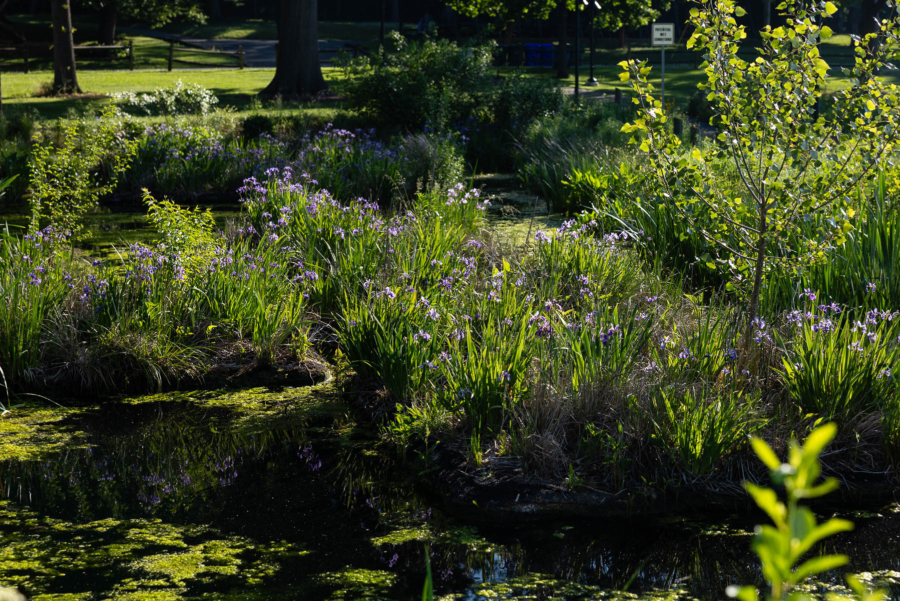
Stormwater runoff is one of the fastest-growing sources of pollution to the Chesapeake Bay. In the City of Lancaster, Pennsylvania, city leaders are tackling the problem with green infrastructure that cleans, absorbs and redirects polluted water.
The city’s latest project—a wetland-based treatment system at Long's Park—is cleaning local water while establishing habitat for wildlife.
“The Long's Park wetland was constructed in 2023 as a water quality improvement project,” said Angela Brackbill, stormwater program manager at the City of Lancaster. “This was part of the city's pollution reduction plan for the Chesapeake Bay."
Roughly 40% of the land in the City of Lancaster is made up of buildings, parking lots, roadways and other impervious surfaces. These hard surfaces cause stormwater to wash into streams or sewer systems instead of soaking into the ground. That runoff carries nutrients, like nitrogen and phosphorus, that can cause low-oxygen “dead zones” downstream, as well as sediment and chemicals that further degrade habitat.
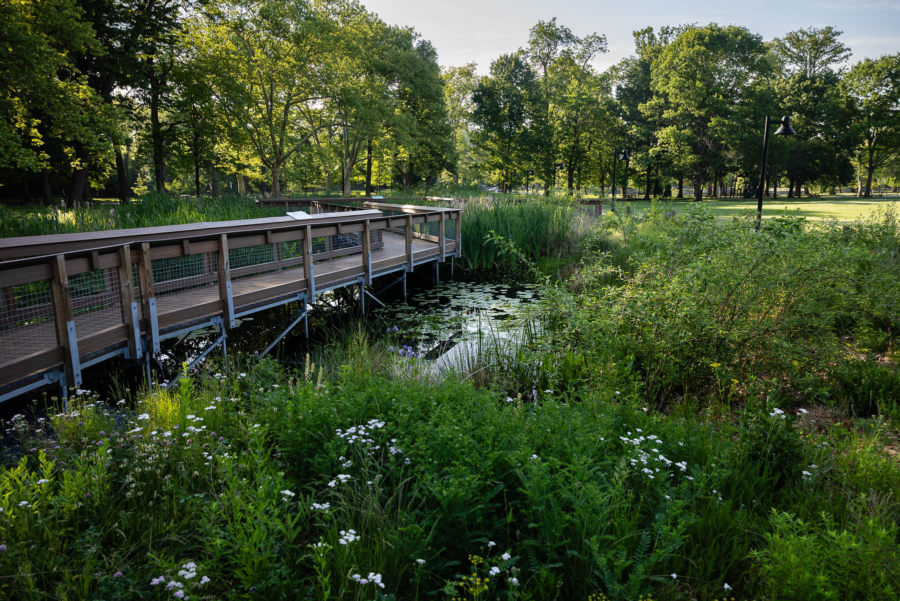

At Long’s Park, runoff flows in from a nearby highway as well as the 80-acre park itself. To treat all of this runoff, the city installed a sophisticated stormwater management system that includes an artificial pool known as a forebay, a second pool that uses iron to remove phosphorus, and two separate wetlands. Water from a massive three-acre pond is pumped into this system—and it’s also where the cleaned water ends.
“All of that treated water that makes its way to the pond actually overflows to a little unnamed tributary to Little Conestoga Creek, which is ultimately a tributary to the Chesapeake Bay,” Brackbill said.
The filtration system treats an average of 44,000 gallons per day. During intense storms, up to a million gallons of water can be held in the system without overflowing.
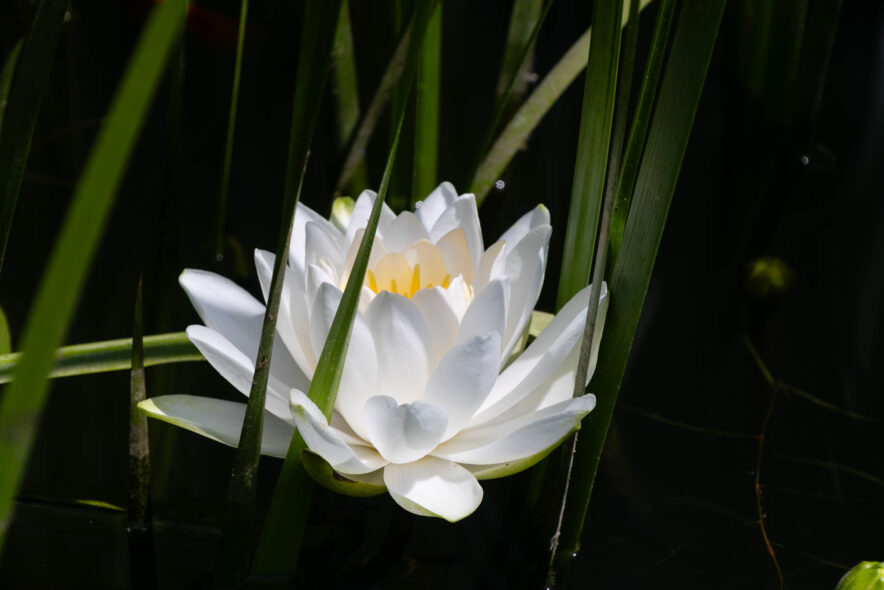
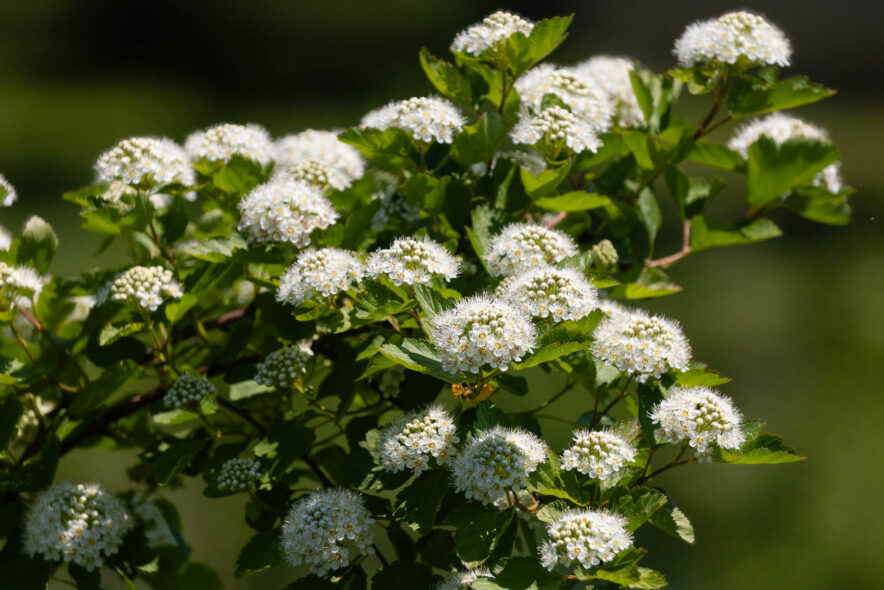
Now well-established, the wetland and surrounding plants are popular among visitors to the park, who can cross over the marsh via a boardwalk. Over 10,000 young plant “plugs” were put in the ground during construction, including 250–300 shrubs and 300 aquatic plants. Wildflower seeds were dispersed around the marshes, sprouting habitat for pollinators and adding stunning pops of color during spring and summer.
"We actually had to put some signage up because folks were picking bouquets,” Brackbill said. “We know they're beautiful—let's leave them for the birds and the bees."


The project was funded by state and local grant programs, and in 2025, earned a Governor’s Award for Environmental Excellence. A 2026 monitoring study of the green infrastructure project found that the system reduces the amount of nitrogen by 80%, with a near-100% reduction in phosphorus and algae.
Since 2010, the City of Lancaster has constructed more than 80 green infrastructure projects as part of its Green Infrastructure Plan. As one of the city’s most visible projects, the Long’s Park wetland is a strong demonstration of the power of these “green” designs for cleaning up local waters.
"A project like this that we know is really increasing water quality—not only for our local waterways, but for the Bay—is a huge deal to me,” Brackbill said.
Comments
Nice article. I visit a couple living at a retirement village in Lancaster and will try to visit The Longs Park Wetlands later this summer
Thank you!
Your comment has been received. Before it can be published, the comment will be reviewed by our team to ensure it adheres with our rules of engagement.
Back to recent stories