
The role of non-harvest areas in Chesapeake Bay oyster restoration
Chesapeake Bay Program partners help bring back the oyster population
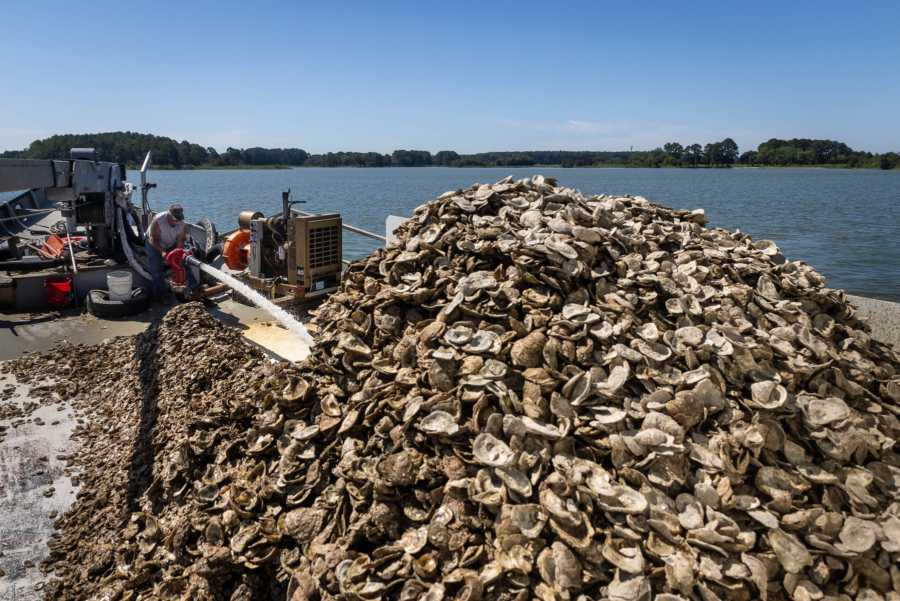
If you live or have traveled within the Chesapeake Bay region, you have probably encountered the iconic eastern oyster (Crassostrea virginica). You can find them in almost any seafood restaurant, served on the half shell, baked or fried—or you might see their shells adorning your neighbor’s front door as a decoration.
Despite their popularity, the native oyster population has experienced significant decline due to historic overharvesting, disease, pollution and habitat loss. The decrease in the Bay’s oyster population—and in the reefs that oysters form—has affected both the economy and the environment. As natural filter feeders, oysters clean the water, which benefits species like underwater grasses; their reefs serve as habitat for blue crabs and fish such as juvenile striped bass.
While a wide range of conservation efforts improve the Bay’s oyster habitat, one of the most effective has been developing oyster reef restoration areas where habitat is restored and harvesting is limited.
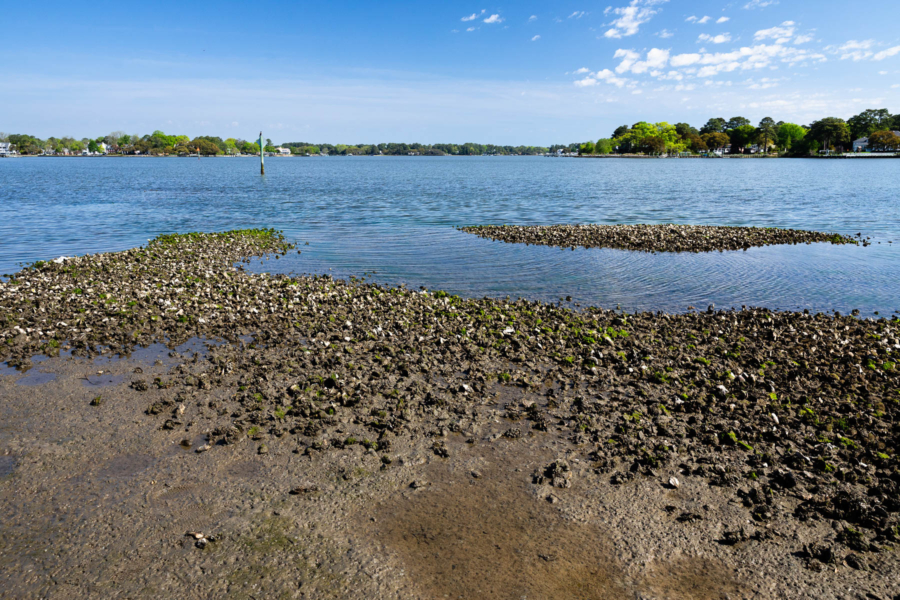
Oyster restoration areas—one solution to an environmental challenge
As one solution to the decline in oyster populations, Maryland and Virginia have established some non-harvest areas throughout the Chesapeake Bay to help give more oysters a chance to reproduce and grow into healthy reefs.
Non-harvest oyster reefs have different meanings throughout the Bay. In Maryland, non-harvest areas are permanently closed and are sometimes designated as sanctuaries. In Virginia, the closure of reefs is more temporary, and the areas are not considered sanctuaries. Regardless of state designation, non-harvest reefs all fall under the umbrella of what can be thought as, “oyster reef restoration areas”, where the goal is to rebuild populations, improve habitat and enhance water quality.
In 2014, the Oyster Outcome under the Chesapeake Bay Watershed Agreement called for state and federal partners to restore oyster habitat in 10 tributaries by 2025, and ensure their protection. By the end of 2025, oyster reef habitats in these areas, including habitat in an 11th bonus river, totaled 2,294 acres! That’s more than 3.75 square miles of habitat! The oyster reef restoration effort in the Chesapeake Bay is the largest oyster restoration project in the world.
These oyster reefs are already having a positive effect on the Bay. According to Maryland’s Fall 2025 Oyster Survey, the greatest increase in adult oysters in the Chesapeake Bay was from restoration areas targeted as a result of the Watershed Agreement. The successes of these oyster reef restoration areas are not only having an effect locally, but have also garnered attention on an international scale and have inspired oyster restoration in waters beyond the Chesapeake Bay.
Marine protected areas in the Chesapeake Bay
Protecting marine habitats from harvest is not unique to oysters reef, or to the Chesapeake Bay. All around the globe, marine protected areas (MPAs) are established to safeguard wildlife, history and culture. According to the National Oceanic Atmospheric Administration, MPA is an umbrella term to describe an area “designated and managed for the long-term conservation of marine resources, ecosystems services, or cultural heritage.”
Here in the Bay, the Mallows Bay-Potomac River National Marine Sanctuary is an MPA that aims to protect an important cultural and historical resource, the Potomac River Ghost Fleet. Other examples of MPAs in the Chesapeake Bay include National Estuarine Research Reserves and National Wildlife Refuges where designation focuses on ecological restoration and scientific research.
Although not physically connected, the collection of MPAs in these waters help provide additional protection and resilience to the ecologically or culturally important resources in the Chesapeake Bay.
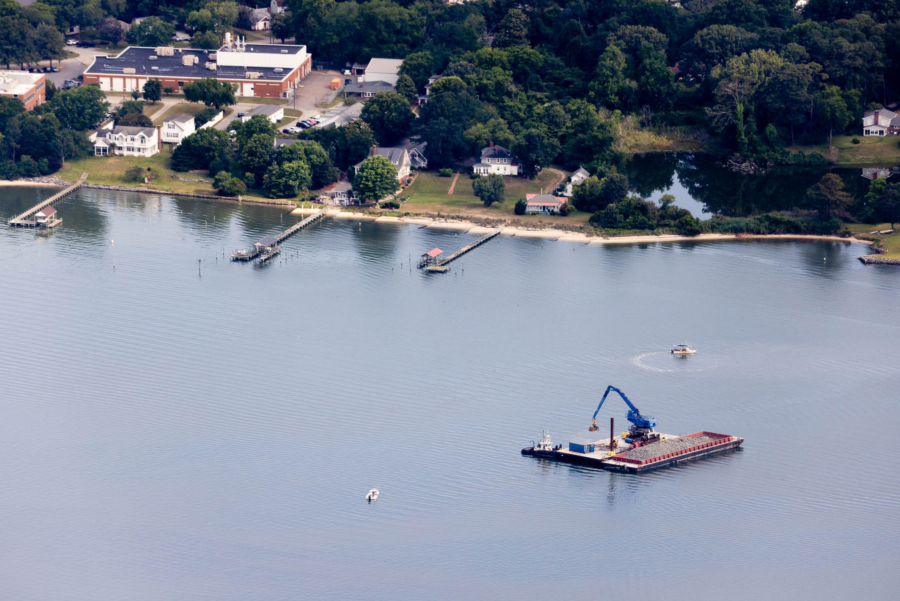
Future outlook of oyster restoration in the Chesapeake Bay
In December 2025, the Chesapeake Bay Program chose to continue the work of the Oysters Outcome, establishing new targets in an updated Watershed Agreement.
Under this Watershed Agreement, state agencies and their partners agreed to restore or conserve an additional 2,000 acres of oyster reef habitat and to maintain the 11 tributaries already created.
The revised outcome also strives to maintain sustainable oyster abundance through oyster fisheries and aquaculture practices. Before they are harvested, oysters still provide benefits to the Bay by filtering the water and providing habitat while they are in the water. Through this outcome, the Chesapeake Bay Program can work with jurisdictions like Maryland and Virginia to recognize the benefits associated with sustainable management of aquaculture and oyster harvest areas.
The work of the Oysters Outcome demonstrates how large-scale oyster restoration focal areas, similar to MPAs, can be used to benefit the Bay, its marine life, and those who make their living off the water. Soon, Chesapeake Bay Program partners will select the next tributaries where oyster habitat will be restored—and conserved—for years to come.
This blog is part of a series of stories about Chesapeake Bay designations written by staffers at the Chesapeake Research Consortium. Its authors recently published a report on the influence MPAs have on the Chesapeake Bay.
Comments
There are no comments.
Thank you!
Your comment has been received. Before it can be published, the comment will be reviewed by our team to ensure it adheres with our rules of engagement.
Back to recent stories