
Meet the little kings of the winter forest
The golden-crowned kinglet’s bright orange crown gives snowy forests a pop of color
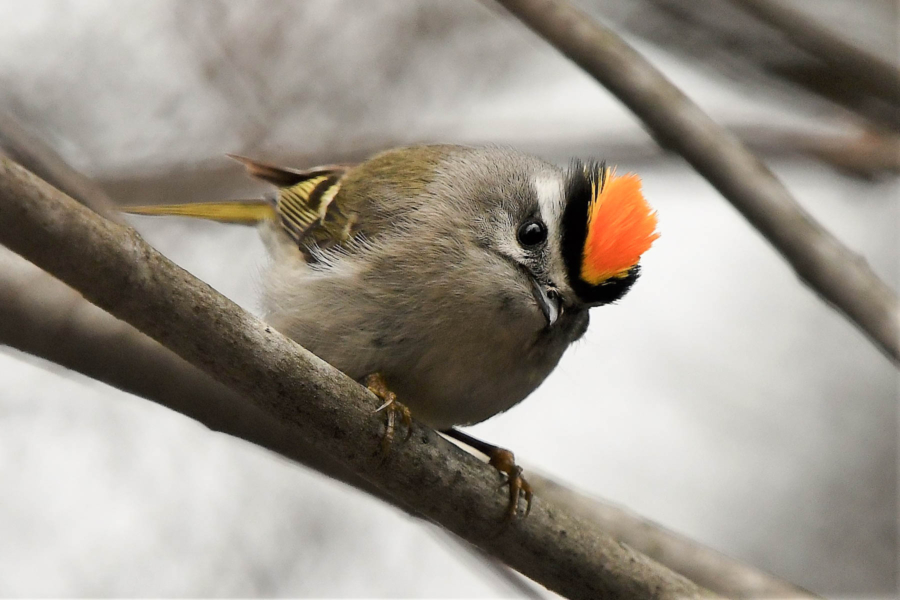
The small but mighty golden-crowned kinglet is one of the tiniest birds you will ever come across in the Chesapeake watershed. These “little kings” weigh roughly the equivalent of just two pennies! Despite their small size, their claim to royalty is well-earned. Their vibrant orange crowns, normally laid flat against their head alongside lines of yellow feathers, puff up like a rock-star’s mohawk when threatened or during courtship.
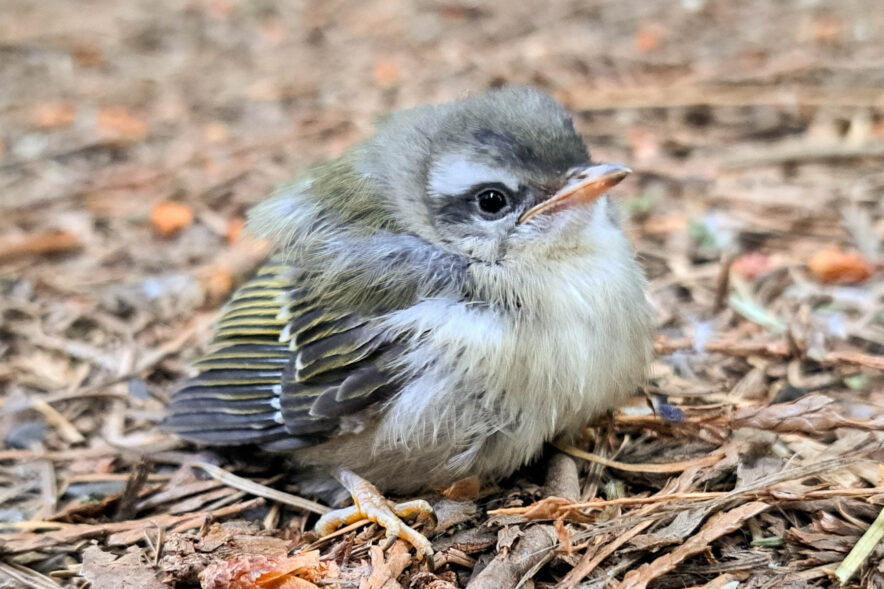
When newly hatched, golden-crowned kinglets are just the size of a bumblebee and completely featherless except for small tufts of down feathers on the top of their heads. As they grow up, however, they turn into incredibly tough little birds. Many migrate from Canada and the Northeastern U.S. as far down as Mexico to spend the winter, passing through the Chesapeake Bay region as they go. A few, however, opt to brave the harsh, cold winters of the north and remain in their favorite habitat, coniferous forests, even after snow transforms them into frosty landscapes.
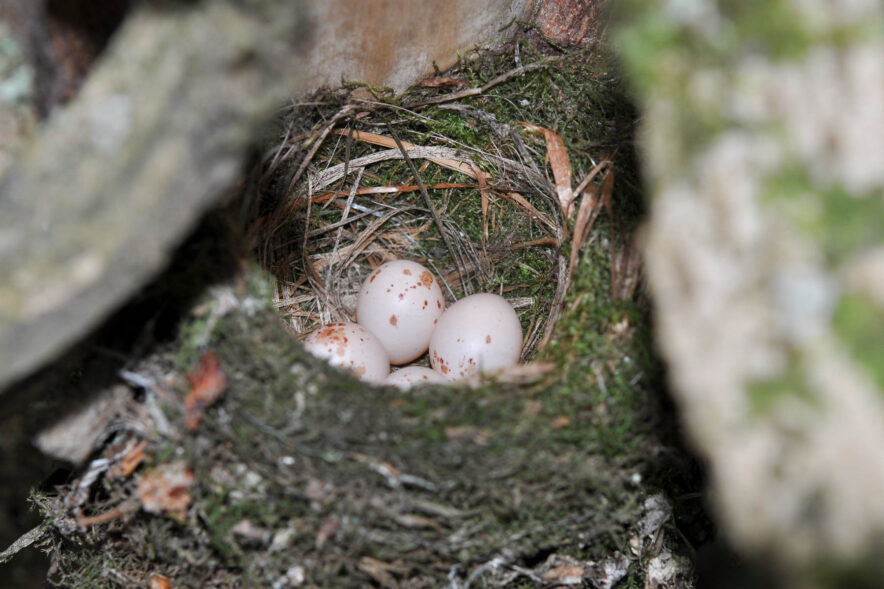
Scientists still aren't completely sure how golden-crowned kinglets survive sub-zero temperatures. They do know that kinglets have a few different strategies, the most adorable of which is simple: they huddle together. Kinglets have been documented huddling on open branches as well in old squirrel nests. Another strategy that keeps them warm is fluffing up their feathers to make a downy blanket that becomes an inch thick. They tuck their heads into the puff, turning into little insulated balls of downy fuzz.
This sweet image may give the impression that golden-crowned kinglets are always gentle, welcoming little birds, but that’s not always the case. They can be quick to join a fight, participating regularly in “interspecies mobbing”, during which they join a different bird species to aggressively chase away a potential predator, usually a much larger bird. They most often ally themselves with another little feathered friend, the chickadee.
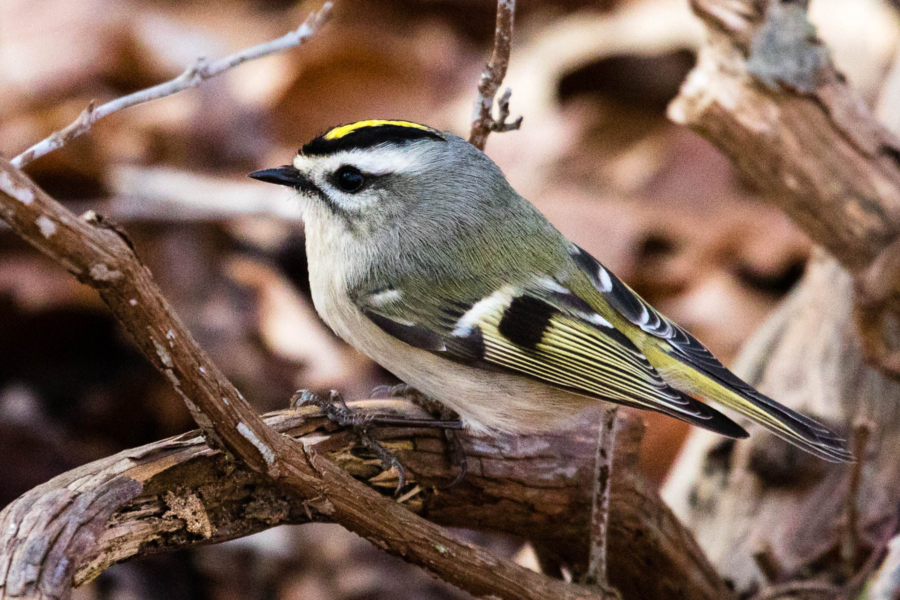
The next time you go for a walk through the woods, listen for a high, thin call followed by tumbling chatter coming from the tree canopy. Golden-crowned kinglets are often heard before they are seen. You might look up and see this little bird hopping and flitting among branches, filling up its belly with insects to prepare for the cold winter nights ahead.
To learn more about the golden-crowned kinglet and other birds, check out our field guide.
Comments
There are no comments.
Thank you!
Your comment has been received. Before it can be published, the comment will be reviewed by our team to ensure it adheres with our rules of engagement.
Back to recent stories