
Nearly 150 acres of wetlands restored at Doe Creek Wildlife Management Area
Ducks Unlimited leads restoration project with U.S. Fish and Wildlife Service funding
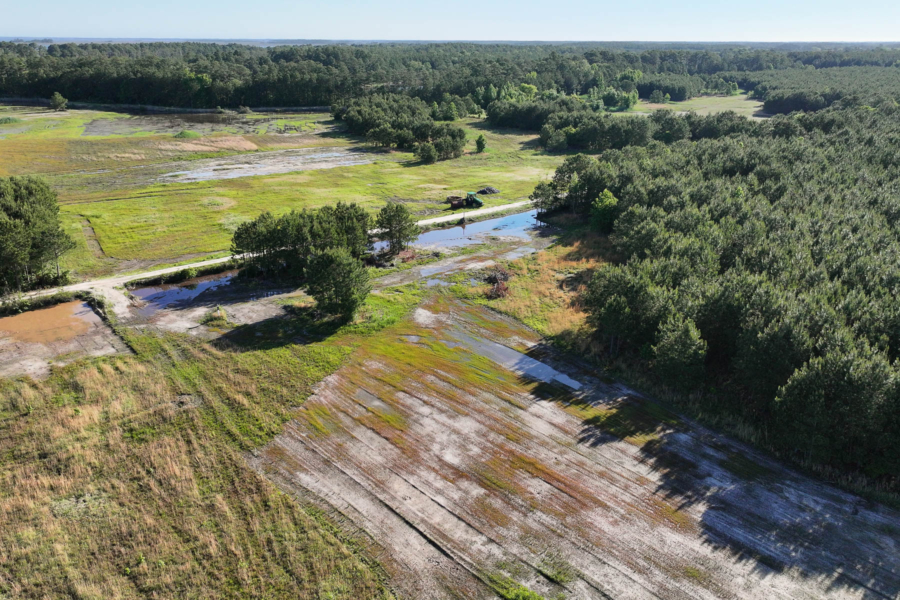
Located along the Chesapeake Bay on the Eastern Shore of Virginia, Doe Creek Wildlife Management Area is a dream destination for ducks, geese and other waterfowl.
In the summer, dry wetland plants provide nutritious seeds for both adult and juvenile birds. During spring and fall, the wetlands flood and offer an even healthier, more food-dense habitat for waterfowl migrating through the region.
“That’s one of the most critical times for migratory waterfowl,” said Ed Farley, manager of conservation programs with Ducks Unlimited. “They’re building those fat reserves for migration and getting in good body condition. Birds with good body conditions are going to be more successful breeders.”
For over a decade, state, federal and nonprofit partners have been working together to make Doe Creek Wildlife Management Area an attractive destination for wildlife. Between 2012 and 2021, over 1,200 acres of wetlands were conserved by the Virginia Department of Wildlife Resources (DWR) and Ducks Unlimited, adding to the existing forest habitat. In 2016, the area opened up to the public for hunting, hiking and birdwatching.
Then, in 2022, Ducks Unlimited received funding from the U.S. Fish and Wildlife Service through the Chesapeake Watershed Investments for Landscape Defense (Chesapeake WILD) grants program, which is administered through the National Fish and Wildlife Foundation, to strengthen some of the area’s wetlands. According to Farley, natural structures previously put in place weren’t functioning properly, leaving the wetlands too wet in the summer and too dry in the spring and fall. As a result, the abundance of seeds was low and waterfowl were visiting the area less often.
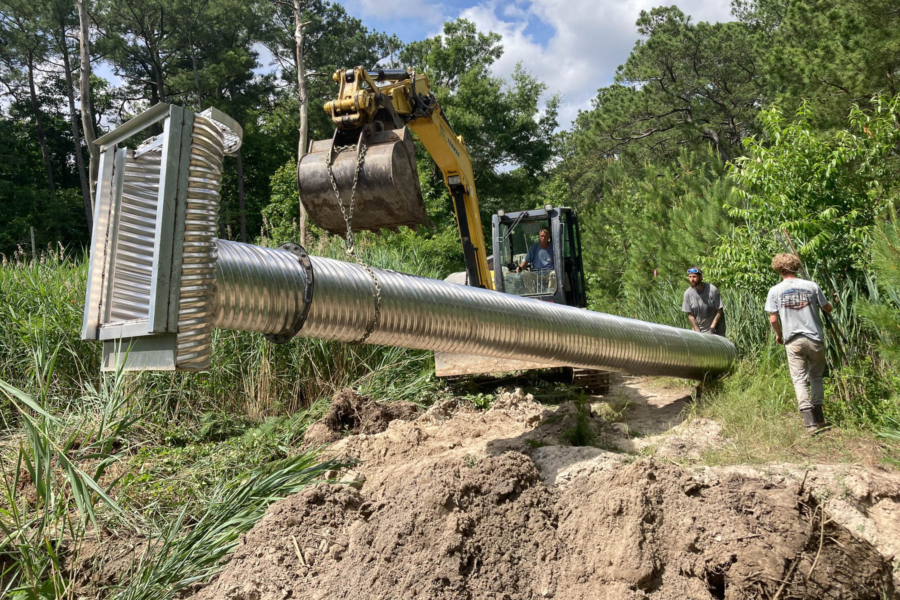
With the funding in hand, Ducks Unlimited partnered with DWR to design and implement new structures that would help the wetland function properly. In total, the organization restored or enhanced 147 acres of wetland, boosting seed production and creating healthier habitat for migratory birds.
“We really improved the habitat quality there,” said Farley.
Overall, the conservation and restoration work at Doe Creek Wildlife Management Area has come together through a mix of funding, including the U.S. Fish and Wildlife Service’s Coastal Wetland Conservation Grant, the Virginia Migratory Waterfowl Conservation Stamp, Pittman-Robertson Wildlife Restoration Act, and private and corporate donors.
“I think that’s a pretty consistent theme of successful conservation projects—working with a lot of partners and a lot of different funding sources to make every dollar go a little bit further,” said Farley.
In the Chesapeake Bay region, the deterioration or loss of wetlands has taken its toll on waterfowl—a group of birds that are deeply embedded in the culture of Virginia and Maryland’s Eastern Shore, while generating tourism and recreation dollars. Losing wetlands has also had a negative impact on the health of the Bay, since these habitats help soak up sediment, nitrogen and phosphorus runoff that worsens water quality.
As a response, the Chesapeake Bay Program has led a coordinated effort to protect wetland habitats, mainly through funding and tools. In the revised Chesapeake Bay Watershed Agreement, the partnership has committed to restoring, creating and enhancing thousands of tidal and nontidal wetland acres by 2040.
Projects such as Doe Creek Wildlife Management Area help the partnership meet a variety of goals that ultimately lead to a healthier Bay.
“Our wetland work here is benefiting waterfowl and wetlands on site, but it’s also having these downstream impacts,” said Farley.
Comments
There are no comments.
Thank you!
Your comment has been received. Before it can be published, the comment will be reviewed by our team to ensure it adheres with our rules of engagement.
Back to recent stories