
The chatty songbird that’s easy to hear but difficult to see
The red-eyed vireo blends in with its background but makes itself known by constantly singing
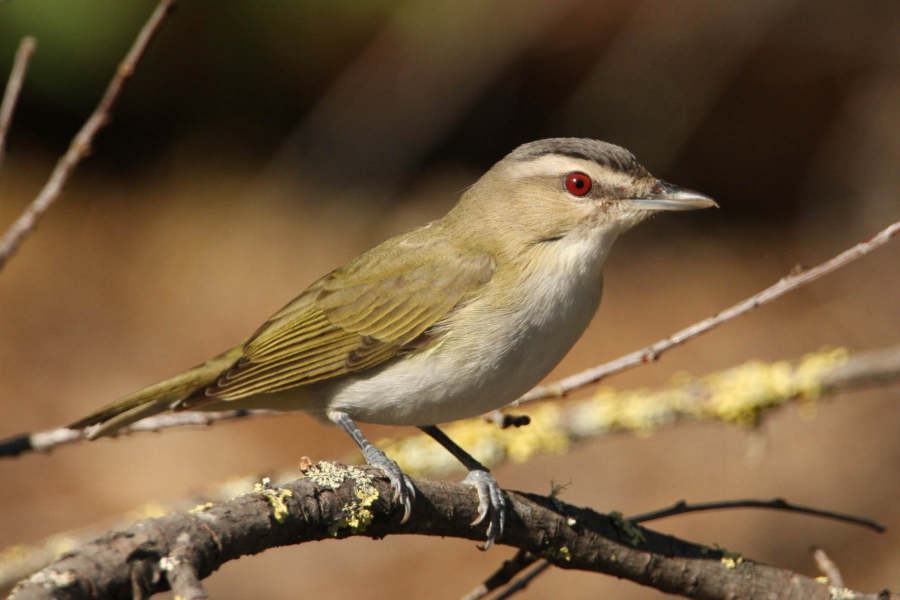
If you spend a decent amount of time in the woods during spring and summer in the Chesapeake region, chances are you’ve heard one of the many songs of the red-eyed vireo. With over 12,500 recorded song types and singing upwards of 20,000 times per day, the red-eyed vireo is certainly one of the most vocal birds in the watershed.
Olive-green and gray coloring can make these small songbirds difficult to spot between the trees but their voice ensures that birders have a chance to find them. Although adult birds can be easily identified from their bright red eyes, from which they get their names, red-eyed vireos often have brown eyes and won’t develop the red pigment until after they have grown out of their juvenile phase. Being one of the most abundant birds in the watershed, and much of eastern North America, from spring to fall there are plenty of opportunities to get outside and catch a glimpse of this species foraging for insects or fruit and singing to attract potential mates.
The red-eyed vireo is a great bird for beginner birders not only for its abundance, but also for its unique behaviors. Mating season takes place from mid-April through August and brings displays of affection from the males. The males sing persistently throughout the day to attract potential female mates; during courtship, the birds then present themselves with their feathers slicked down and sway their bodies from side to side. Once the female has chosen her mate, both birds will vibrate their wings simultaneously to indicate a pairing. Females will build a compact nest within shrubs and lay 3-5 eggs that hatch after about two weeks.
After the mating season has concluded and the weather begins to get cooler, the red-eyed vireo will start its journey south for the winter. The species possesses a magnetic compass that guides their migration between continents. Red-eyed vireos can travel as far south as the Amazon basin of South America during the winter months. One way researchers have been able to tell where the bird will migrate is its fat storage: birds with more fat will go across the Gulf while leaner birds tend to stay close to the coastline or travel inland.
Before long, the red-eyed vireo will return to the Chesapeake region along with the warm weather and start of spring. With a little patience, spotting a red-eyed vireo can be a high-reward experience for amateur birders.
Comments
There are no comments.
Thank you!
Your comment has been received. Before it can be published, the comment will be reviewed by our team to ensure it adheres with our rules of engagement.
Back to recent stories