
Twin Rivers Farm invests in its namesake waterways
Two local organizations set landowners up for success
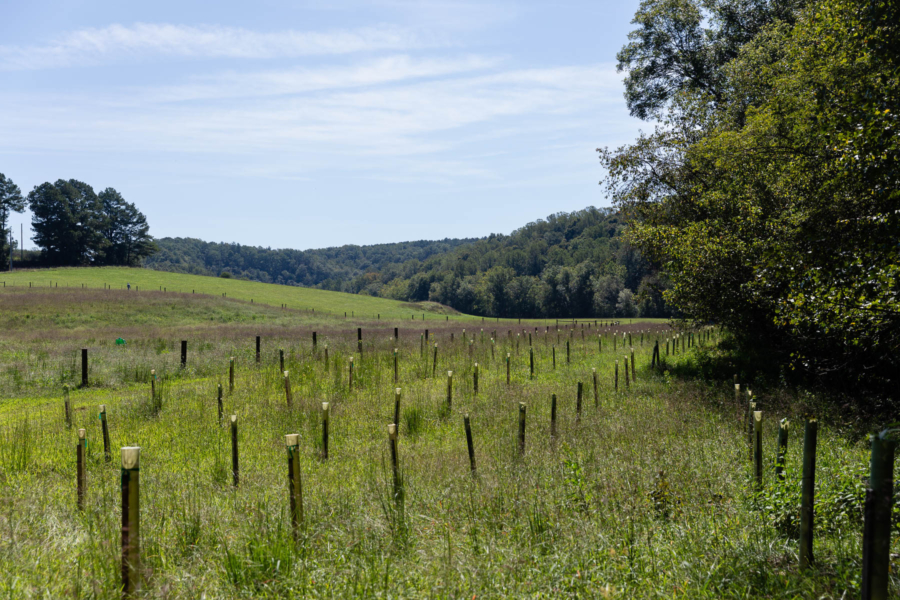
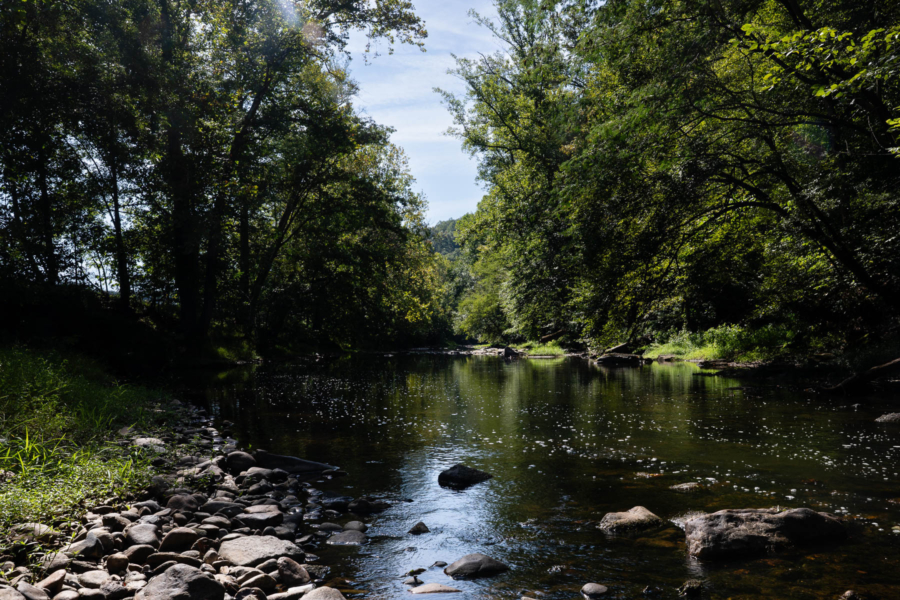
Nestled within the rural farmland of Nelson County, Virginia, Twin Rivers Farm takes its name from the Piney and Tye Rivers that frame the property. But for owners Jerry and Ann Samford, these waterways aren't just scenic borders—they drive how the land is managed.
“We’ve always been proponents of cutting down erosion and runoff to the river,” said Jerry, who purchased the property with his wife in the 1990s.
Over the past several years, the Samfords have been transitioning the 200-acre farm to accommodate cattle grazing. The couple knew the impact that grazing can have on the land and water, so they partnered with the Thomas Jefferson Soil & Water Conservation District (TJSWCD) to set up their grazing system and put various conservation practices in place.
So far, TJSWCD has completed the first three phases of a rotational grazing system that’s designed to improve soil health, protect nearby waterways and keep the cattle healthy. On many farms, livestock are left to openly graze the pasture or eat at enclosed feeding areas, which can lead to overgrazing and unhealthy cattle. But through rotational grazing, animals are moved from small sections of pasture, called paddocks, throughout the week, which allows the pasture to regrow and remain healthy.
“Breeding cows is all about growing grass,” Jerry said. “If you keep cows on the grass for shorter periods of time and let it regrow, you have healthier grass. If you have better grass, you have healthier cows.”
Luke Longanecker, Conservation Programs Manager for TJSWCD, is a big proponent of rotational grazing and has helped farmers throughout the region establish their system, including the Samfords.
“All the research shows that you’re going to have healthier animals, higher weight gain, better calving success and a more productive pasture through rotational grazing,” Longanecker said.
As part of the project, Longanecker and his team have also installed fencing along the pasture that keeps the livestock out of the rivers. Without fencing, livestock make daily trips to the closest stream or river to drink water. As the several-hundred-pound animals move in and out of the water, they gradually erode the banks, causing harmful sediment runoff. Longanecker pointed out that the animals also “do their business” in the water, spiking bacteria levels.
Keeping the cows out of the stream can also be good for business. For one, the fences allow farmers to keep better tabs on the herd and avoid spending time looking for lost animals. This is particularly important for pregnant cows, which tend to seek cool and shady areas.
“Every farmer will tell you they’ve lost an animal while calving,” Longanecker said.
Livestock can also get sick from drinking dirty water and injure themselves walking in and out of streams. If male bulls get injured badly enough, they can no longer breed.
“If the bull's not working, you just have lost a significant amount of money,” Longanecker said.
So far, TJSWCD has installed 6,400 feet of fencing and four watering troughs as a substitute for watering livestock directly in the rivers. In the next three phases, the organization will install another 16,500 feet of fencing and 12 watering troughs. Longanecker also plans on eventually installing 16 paddocks that the Samfords can use to comfortably graze the cattle.
Practices for the project were all funded through the Virginia Agricultural Cost Share (VACS) program, which is supported by the Virginia Department of Conservation and Recreation (DCR). According to the DCR website, the program's practices can often be funded by a combination of state and federal funds, reducing the landowner‘s expense to less than 30% of the total cost.
To enhance the fencing and rotational grazing system, the Samfords have also partnered with the James River Association (JRA) to add a protective layer of trees, called a riparian forest buffer, along both the Piney and Tye Rivers. In the fall of 2026, JRA planted 3.72 acres of trees through the James River Buffer Program—a state- and federally-funded program that plants trees at no cost to the landowners.
Riparian forest buffers are considered one of the most cost-effective ways to protect waterways that feed the Chesapeake Bay. The trees help stabilize streams, which prevents erosion and absorbs nutrient and sediment runoff that washes off of farms, while creating shade that keeps the water cool for cold-water fish and other wildlife.
“The goal of our program is to restore streamside forests,” said Anne Marie Roberts, senior restoration field manager with JRA. “We’re planting native hardwoods to help with runoff off the land, shading our stream corridors, helping with erosion control and also helping with wildlife habitat.”
With all of these practices in place, the Samfords have been able to safeguard the Piney and Tye Rivers while expanding their cattle grazing operation. While Longanecker is a proponent of rotational grazing, the practice is in no way mandatory for landowners to install other conservation practices—like stream fencing and forest buffers. At the end of the day, Longanecker says he wants to do what’s best for the landowners and their animals.
“My main goal is, when I leave this farm in a couple years, does this system work for you?” Longanecker said.
Comments
There are no comments.
Thank you!
Your comment has been received. Before it can be published, the comment will be reviewed by our team to ensure it adheres with our rules of engagement.
Back to recent stories