Search Results
Results
Videos:Blue Crabs
Last updated: September 15, 2026
Why are blue crabs important and what's being done to ensure they remain an icon of the Chesapeake Bay? See how researchers from the Maryland Department of Natural Resources monitor the blue crab population. Learn more about blue crabs in the Chesapeake Bay Program’s online Field Guide.
Pages:Blue Crabs
Last updated: July 9, 2026

Pages:Guided Tour: Blue Crabs From Bay to Table
Last updated: May 13, 2026
Publications:Blue Crabs and the Chesapeake Bay
Last updated: May 9, 2025
This fact sheet overviews blue crab anatomy, life cycle, habitat and current status of the Chesapeake Bay blue crab population
FAQ:Blue Crabs
Last updated: June 23, 2025
Publications:2024 Blue Crab Advisory Report
Last updated: May 27, 2026
This report summarizes the results of the 2022 and 2023 Blue Crab Winter Dredge Survey, conducted from December to March by the Maryland Department of Natural Resources (MDNR) and the Virginia Institute of Marine Science (VIMS). This report estimates the abundance of blue crabs in the Chesapeake Bay. The information in this report is used to assess blue crab stock status relative to female-specific management reference points.
Stories:Blue crabs at sustainable levels
Last updated: January 30, 2023
Pages:Chesapeake Bay Stock Assessment Committee (Blue Crab Workgroup)
Last updated: September 15, 2026
Stories:Clues of a growing blue crab
Last updated: September 15, 2022
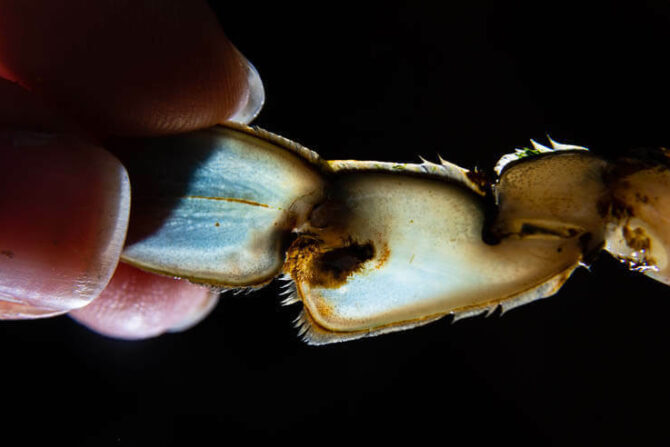
Stories:How can you tell the difference between a hardshell crab and a peeler crab?
Last updated: September 15, 2022
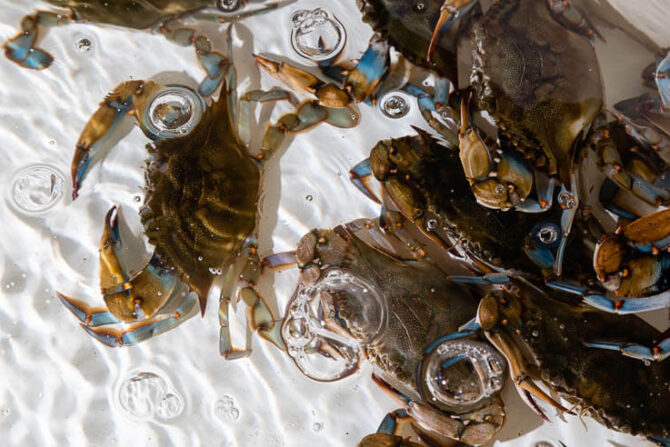
Stories:Bay scientists evaluate reasons for the blue crab’s population decrease
Last updated: April 7, 2023
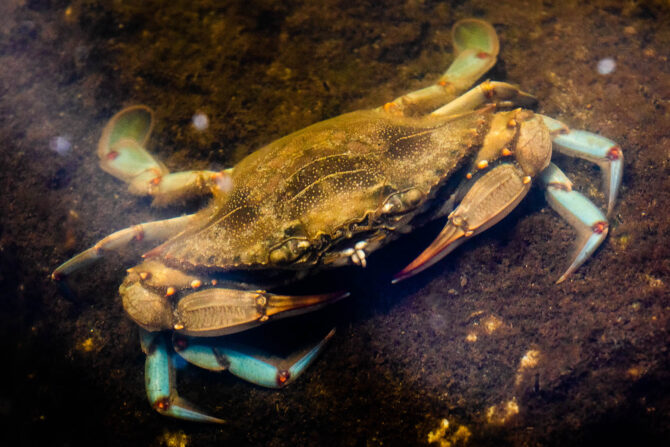
Stories:Denser grass beds hold more blue crabs
Last updated: January 30, 2023
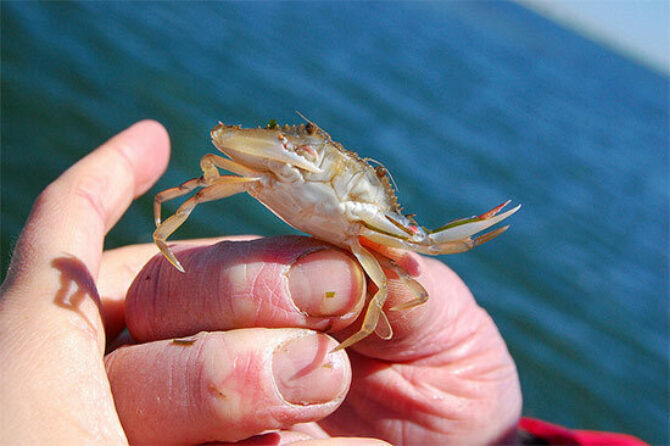
Stories:Adult female blue crab abundance rises 92 percent in 2016
Last updated: July 22, 2022
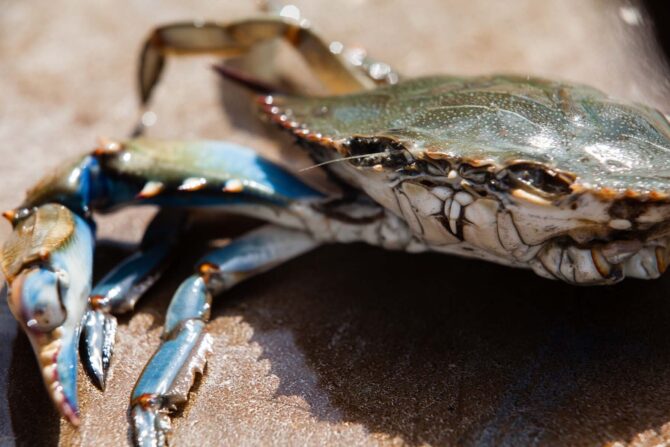
Stories:Chesapeake Bay blue crab population remains healthy and sustainable, despite population decline
Last updated: January 30, 2023
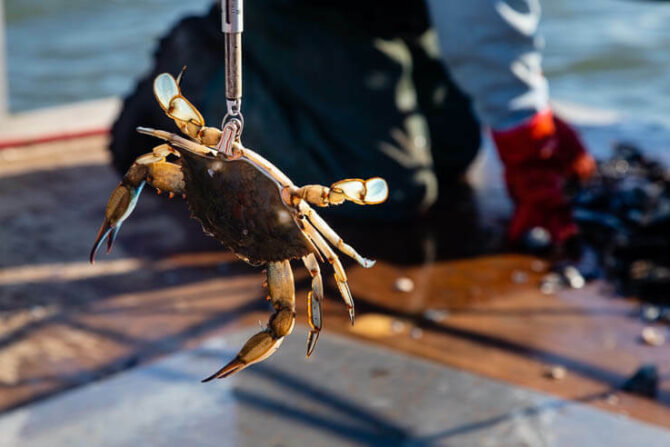
Stories:Maryland, Virginia Report Decreased Female Crab Harvest in 2008
Last updated: July 22, 2022
Stories:Bay Blue Crab Population Increases Significantly
Last updated: July 22, 2022
Stories:Photo Essay: The blue crab winter dredge survey completes its course
Last updated: July 22, 2022
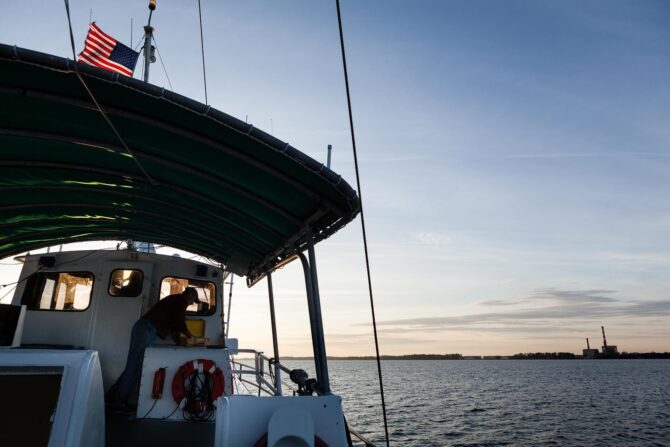
Stories:Blue Crab Advisory Report Recommends Continued Conservation Measures
Last updated: July 22, 2022
Stories:2026 Blue Crab Advisory Report shows below-average population, but no overfishing
Last updated: June 30, 2026
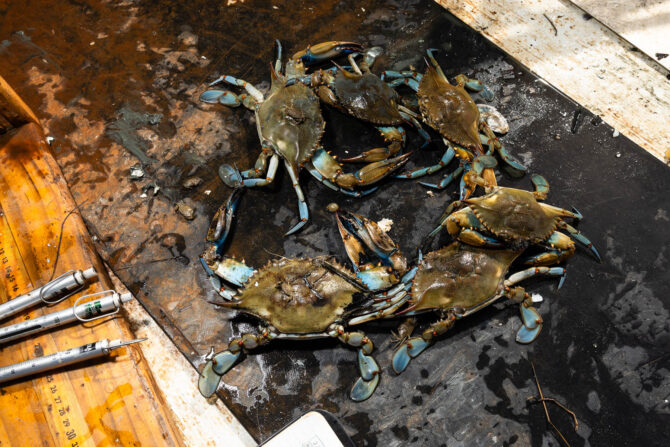
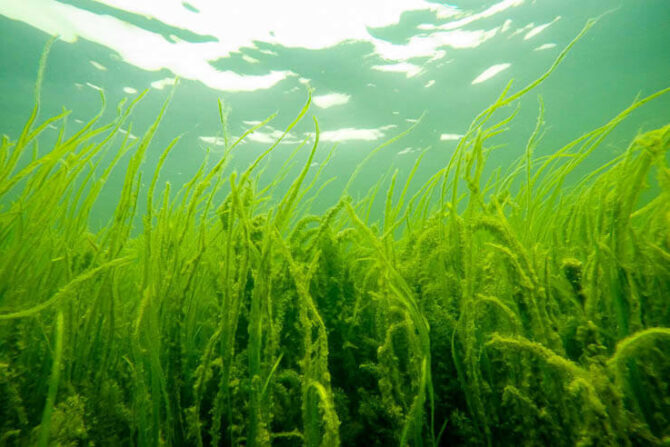
Stories:What do more underwater grasses mean for Chesapeake wildlife?
Last updated: December 22, 2022
Publications:Adoption Statement - Blue Crab Fishery Management Plan, Amendment
Last updated: May 9, 2025
The adoption statement was to implement the management strategies and actions recommended by this amendment to protect blue crab spawning potential, reduce exploitation, increase our biological understanding of blue crabs through monitoring, identify and protect blue crab habitat, and incorporate ecosystem processes.
Videos:Could blue crabs weather a changing climate?
Last updated: August 26, 2025
Hillary Lane Glandon is a doctoral student at the University of Maryland Center for Environmental Science Chesapeake Biological Laboratory, and she has spent five years studying the future of blue crabs in the Chesapeake Bay as temperatures warm and ocean acidification makes an impact. Read our feature story about Glandon's research on blue crabs and climate change.
Stories:Year in review: Our most popular articles about the Bay in 2016
Last updated: July 22, 2022
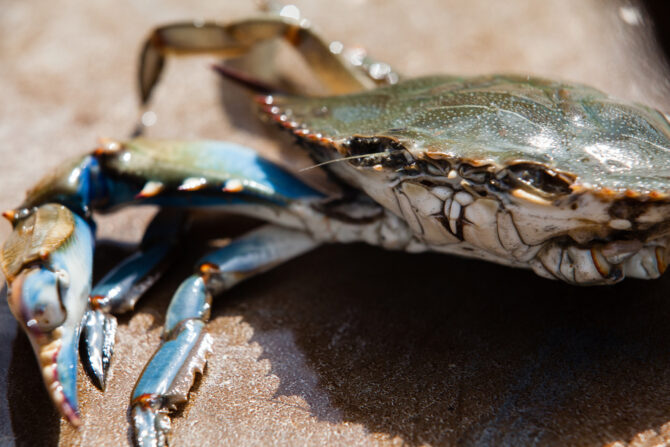
Stories:Counting blue crabs with the winter dredge survey
Last updated: January 30, 2023
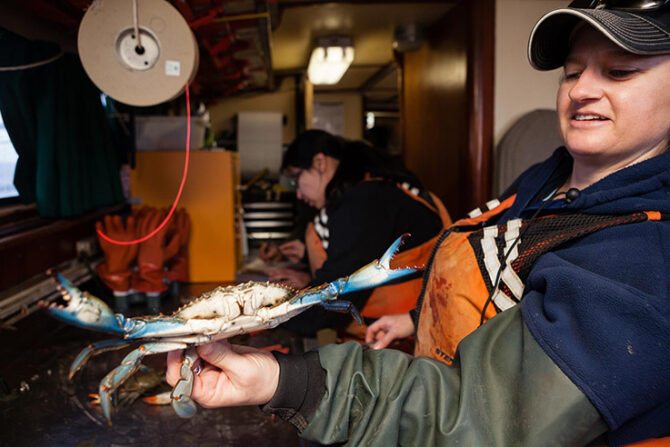
Stories:Could blue crabs weather a changing climate?
Last updated: July 22, 2022