
Chesapeake Bay Program Provides Final Snapshot of Progress Under 2014 Watershed Agreement
The 2024-2025 Bay Barometer tracks restoration progress across the watershed
Annapolis, Maryland—The Chesapeake Bay Program is pleased to announce the release of the annual 2024-2025 Bay Barometer: Health and Restoration in the Chesapeake Bay Watershed. This report summarizes data and information published over the past year on the indicators the partnership uses to track the health of the Bay and its watershed.
The 2024-2025 Bay Barometer provides the most up-to-date information for the goals and outcomes of the 2014 Chesapeake Bay Watershed Agreement. Through its extensive network of partners, the Chesapeake Bay Program coordinates data collection and verification to track progress toward the achievement of each outcome. The data found in the report reflects the health of the Chesapeake Bay watershed over the course of many years, and in some cases, decades. Outcomes are updated on different timelines, and in this year’s report, the most recent data ranges from 2023 through 2025.
This year’s report shares progress on every outcome in the 2014 Watershed Agreement, with 17 of these outcomes having been updated throughout 2025 with the most recently available data. Here are some highlights from this year’s Bay Barometer:
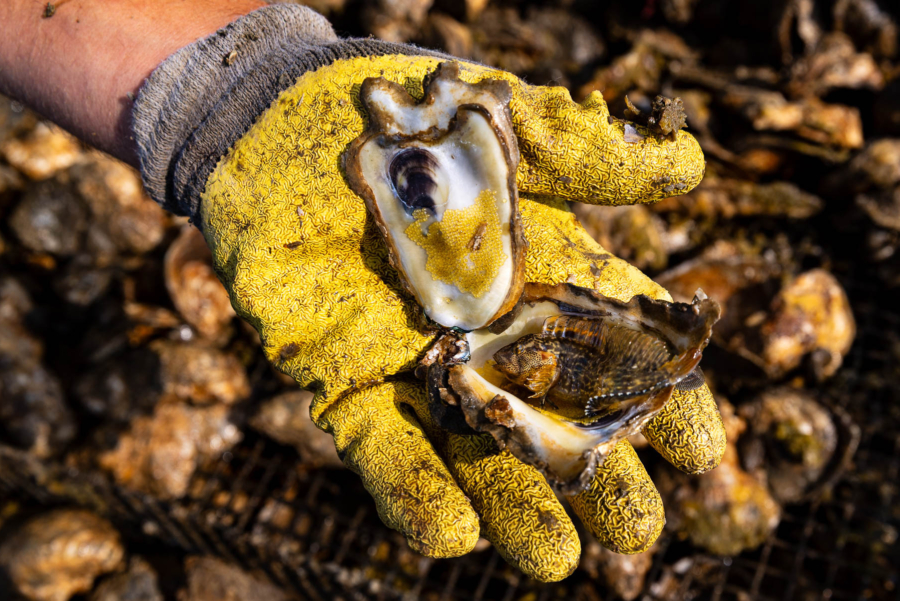
- Oysters: In 2025, Maryland and Virginia completed large-scale oyster reef restoration in the Manokin and Lynnhaven rivers, respectively. This achieved the goal of restoring native oyster habitat in 10 Bay tributaries by 2025.
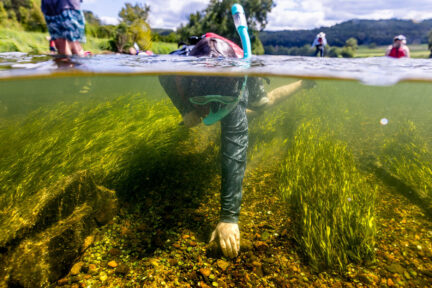
- Submerged Aquatic Vegetation (SAV): An estimated 83,252 acres of underwater grasses were observed in the Chesapeake Bay and its tidal tributaries in 2024, attaining 64% of the goal to achieve and sustain 130,000 acres of underwater grasses by 2025.
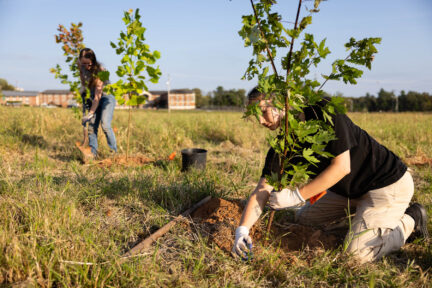
- Tree Canopy: Between 2014 and 2024, 17,082 acres of trees have been planted in communities across the watershed. Despite this progress, the Chesapeake Bay Program’s High-Resolution Land Use/Cover and Change Data showed a net loss of more than 28,000 acres of community tree canopy across the watershed in between 2013/14-2021/22.
- Public Access Site Development: Across the watershed, 312 new boat ramps, kayak launches, docks and other sites for the public to access or view the water, have been added between 2010–2024. This exceeds the goal of opening 300 new public access sites by 2025.
“Maryland continues to make important progress on our work to restore the Chesapeake Bay,” said Maryland Department of Natural Resources Secretary Josh Kurtz. “Last year, We completed the last of the five tributary-scale oyster restoration projects encompassing a decade of work. Parallel to that effort, we’ve seen oyster populations in the Maryland portion of the Bay triple since 2005. On land, we’re proud to have now planted more than 1.5 million trees as we move closer toward our goal of planting five million trees in Maryland by 2031. We were also honored to work closely with other Bay states, the federal government and local jurisdictions to revise the Chesapeake Bay Watershed Agreement to reaffirm our shared commitment to work toward meeting the goals and outcomes in the Agreement for the next 15 years.”
As the Chesapeake Executive Council approved a revised Chesapeake Bay Watershed Agreement in December 2025, future Bay Barometer reports will highlight progress achieved in meeting the updated outcomes. The outcomes in the revised Watershed Agreement build upon what has already been accomplished since 2014, while integrating the latest science, policy and data to ensure, to the best extent possible, that updated outcomes are clear, measurable and time-bound.
“Pennsylvania continues to find success in cleaning up our local waters and the Chesapeake Bay by working with our partners and stakeholders to ensure we have clean water, healthy landscapes, thriving fisheries and habitat, and engaged communities for today and for future generations,” said Pennsylvania Department of Environmental Protection Secretary Jessica Shirley. “Under Governor Josh Shapiro’s leadership we are making strategic investments that deliver the most conservation bang for our buck, and we are seeing cleaner water as a result.”
The Chesapeake Bay Program’s one-stop shop for the most current data on the progress made toward the outcomes in the Chesapeake Bay Watershed Agreement, ChesapeakeProgress, is currently being updated to reflect the revised Watershed Agreement and some pages are currently unavailable. The most recent data and information for the outcomes in the 2014 Chesapeake Bay Watershed Agreement can be accessed by visiting the “2025 Indicator Snapshot” webpage on ChesapeakeData.
“As we enter the next chapter of Chesapeake Bay restoration, this year’s Bay Barometer is more important than ever,” said EPA Mid-Atlantic Regional Administrator Amy Van Blarcom-Lackey. “We can celebrate our progress and successes, while working towards our new data-driven, time-bound and measurable goals. I have no doubt our refocused efforts will accelerate progress and move us forward.”
Recent Press Releases
Chesapeake Bay underwater grass increases 7% in 2025, nearing 2030 milestone

Chesapeake Bay watershed jurisdictions continue working toward nitrogen and phosphorus goals, with sediment goal already achieved
Annual Chesapeake Bay Awareness Week celebrates a watershed “Built by Nature, Protected Together”
Supporting Materials
- 2024-2025 Bay Barometer: Health and Restoration in the Chesapeake Bay Watershed [PDF, 15.9 MB]
- The 2024-2025 Bay Barometer: A Defining Year for the Chesapeake
- Fact Sheet: Health and Restoration in Delaware (2024-2025 Bay Barometer) [PDF, 399.1 KB]
- Fact Sheet: Health and Restoration in the District of Columbia (2024-2025 Bay Barometer) [PDF, 454.3 KB]
- Fact Sheet: Health and Restoration in Maryland (2024-2025 Bay Barometer) [PDF, 383.7 KB]
- Fact Sheet: Health and Restoration in New York (2024-2025 Bay Barometer) [PDF, 354.9 KB]
- Fact Sheet: Health and Restoration in Pennsylvania (2024-2025 Bay Barometer) [PDF, 430.7 KB]
- Fact Sheet: Health and Restoration in Virginia (2024-2025 Bay Barometer) [PDF, 434.8 KB]
- Fact Sheet: Health and Restoration in West Virginia [PDF, 405.9 KB]