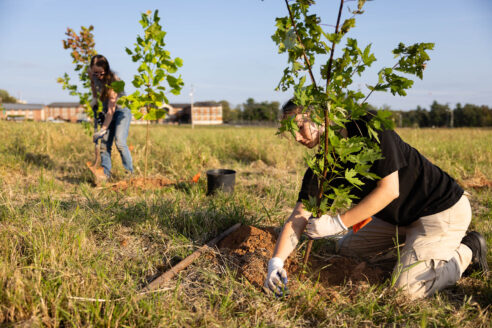
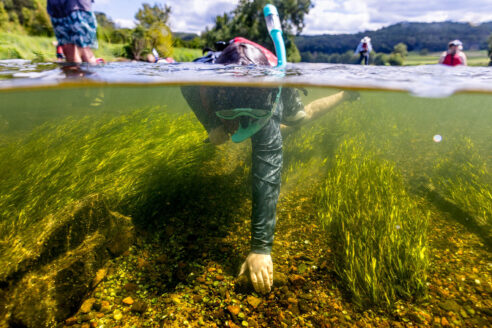
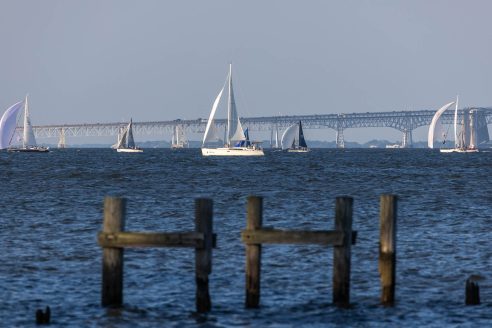
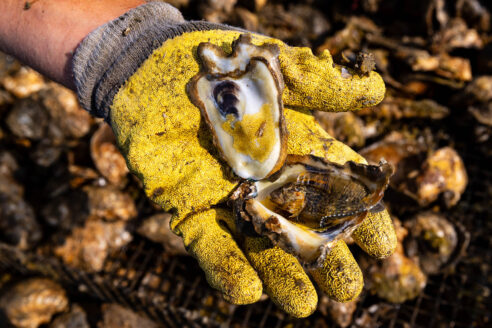
The Chesapeake Bay Program and the National Fish and Wildlife Foundation (NFWF) today announced the recipients of $9.2 million in grants for restoration and outreach initiatives in the Chesapeake Bay Watershed's six states and the District of Columbia. Among a myriad of other benefits of the 41 projects, these efforts will engage 9,000 volunteers in restoration work, restore 176 miles of streamside forests, restore 158 acres of wetlands, and establish 170,000 square feet of green roofs and rain gardens.
The funding for these environmental initiatives was awarded through the Chesapeake Bay Stewardship Fund via the Small Watershed Grants Program and the Chesapeake Bay Innovative Nutrient and Sediment Reduction Grants Program, both of which are administered by NFWF.
”The Chesapeake Bay Stewardship Fund is a model, public-private partnership that has demonstrated its ability over time to achieve measurable and significant on-the-ground conservation results that benefit fish, wildlife and the communities of the Chesapeake,” said David O’Neill, Director of the Eastern Partnership Office at NFWF. “Through these grants, diverse agencies led by the Environmental Protection Agency, the Natural Resources Conservation Service, and the U.S. Forest Service, pool resources with private funding from Altria, Wal-Mart, Wells Fargo, FedEx and others to make smart and cost-effective investments that directly benefit the Bay and its rivers.”
The Innovative Nutrient and Sediment Reduction Grants Program (INSR), funded by the Environmental Protection Agency (EPA), awarded $6.8 million to 21 projects in the Chesapeake Bay Watershed with recipients providing $10.1 million in matching funds. The INSR Program provides grants to innovative and cost-effective projects that dramatically reduce or eliminate the flow of nitrogen, phosphorus and sediment pollution into local waterways and the Chesapeake Bay. Many awardees seek to manage the amount of nutrient runoff from livestock, dairy, and crop farms by conducting outreach and providing technical assistance to farmers.
"These innovative projects, envisioned by non-profits, local governments and other agencies, are an illustration of the incredible commitment people have to restoring our rivers and streams. With NFWF’s invaluable support these projects will make a difference, supporting progress toward a Bay that is increasingly healthy and resilient," said Jeff Corbin, EPA Senior Advisor for the Chesapeake Bay and Anacostia River. "All of these efforts underscore the level of engagement we need from everyone in making daily choices for clean local and regional waters.”
The Small Watershed Grants (SWG) Program, funded by a combination of public agencies and private support, awarded $2.4 million to 20 projects in the Chesapeake Bay Watershed with recipients providing $3.4 million in matching funds. The SWG program provides grants to organizations and municipal governments working to improve the condition of their local watershed through on-the-ground restoration, habitat conservation and community engagement. The projects are expected to reach out to approximately 180,000 landowners on stewardship of their land. Many grant recipients expect to reduce pollution not only through infrastructures such as green roofs and rain gardens but through community outreach initiatives to promote sustainable landscaping and improved practices for managing runoff.
“All of us have a part to play in helping restore the Bay and the Chesapeake Stewardship Fund makes it possible for local communities to get involved in projects that will improve small watersheds in the Bay,” said U.S. Senator Ben Cardin, Chairman of the Senate Water and Wildlife Subcommittee. “The wetland and forest restoration projects help protect shorelines from erosion, control pollution and restore habitat. The Chesapeake Bay is better today than it was a decade ago thanks to the work and dedication of individuals and communities that have worked on projects like these.”
“I applaud the EPA and the National Fish and Wildlife Foundation for their diligent management of the Chesapeake Bay small watershed and nutrient and sediment removal grants,” said Jim Moran, of Virginia’s 8th Congressional District. “One of our most cherished resources, the Chesapeake Bay has fallen victim to contamination from decades of development and agriculture runoff. These grants help build local community efforts to clean the Bay, leveraging resources, and providing new and innovative approaches to fully restore the Bay’s health.”
Examples of this year’s Chesapeake Stewardship Fund grant recipients in Baltimore include:
Examples of this year’s Chesapeake Stewardship Fund grant recipients in Northern Virginia include:
Since 2006, the Innovative Nutrient and Sediment Reduction Grant Program has provided $33.6 million to 75 projects that reduce the amount of nitrogen, phosphorus, and sediment in the Chesapeake Bay Watershed. Since 1999, the Small Watershed Grants Program has provided more than $31.4 million to support 683 projects in the region and has further leveraged close to $98.4 million in local matching funds, for a total conservation investment in on-the-ground restoration of over $128.4 million.
For more information about the Chesapeake Bay Small Watershed Grants Program and the Chesapeake Bay Innovative Nutrient and Sediment Reduction Grants Program, visit www.nfwf.org/chesapeake.